
Austin, Texas / Parks and outdoors
Ann and Roy Butler Hike-and-Bike Trail
Spanning 10 miles around Lady Bird Lake, the Ann and Roy Butler Hike-and-Bike Trail is Austin's premier urban path. It offers scenic waterfront views, lush parkland, and a vibrant connection to downtown's cultural attractions.
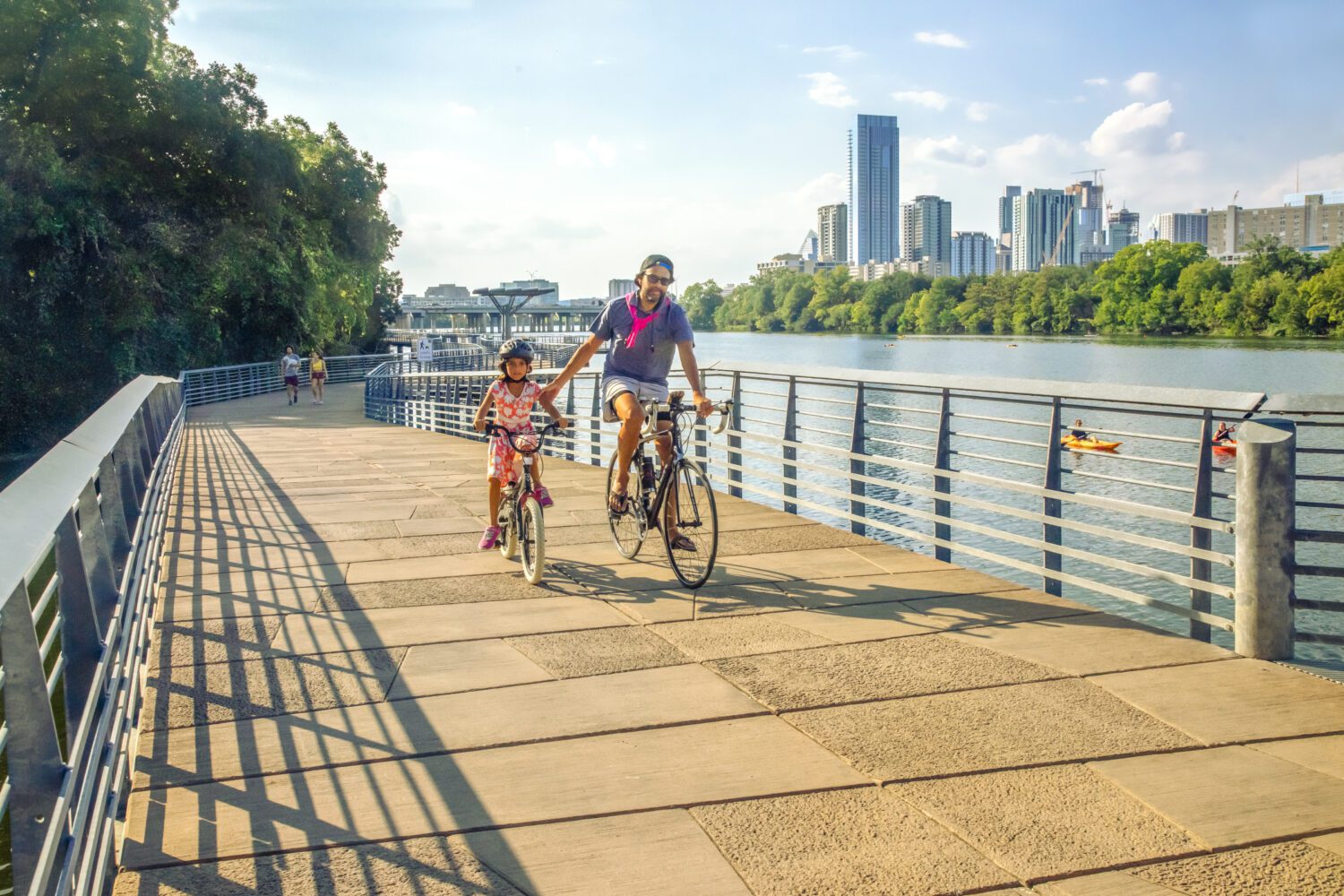
What is the Ann and Roy Butler Hike-and-Bike Trail?
The Ann and Roy Butler Hike-and-Bike Trail is a scenic, lush urban path that forms a loop around Lady Bird Lake in the heart of Austin. It is a highly popular recreational area and daily commuting route that passes by skyscrapers, neighborhoods, ball fields, and cultural attractions.
How long is the trail?
The trail is most commonly described as a 10-mile loop with over 200 acres of surrounding parkland, though some sources list the route as up to 14.6 miles long. It is bookended by Zilker Park on the west and Guerrero Park on the east.
What are the hours for the trail and boardwalk?
The trail is open year-round, and the Boardwalk portion is open daily from 5 a.m. to midnight, with a curfew in place between midnight and 5 a.m.
Is the trail accessible for everyone?
Yes, the trail is open to all individuals and provides ADA-accessible entrances, rest areas, restrooms, and drinking fountains. Dogs are also welcome on the trail but must be kept on a leash.
What should I check before going?
Use Gyde for context, then check official sources for current hours, tickets, construction, and closures.
What to know
The Ann and Roy Butler Hike-and-Bike Trail, also known as the Lady Bird Lake Trail or Town Lake Trail, serves as the vibrant heart of Austin's outdoor recreation. Named after a former Austin mayor and his wife, this lush urban path loops around Lady Bird Lake, a scenic reservoir on the Colorado River. Depending on the source, the trail is described as a 10-mile loop surrounded by over 200 acres of parkland, or up to 14.6 miles long. It is bookended by Zilker Park on its western end and Guerrero Park on its eastern tip. As it meanders along the water's edge, the trail connects visitors to a diverse landscape of skyscrapers, quiet neighborhoods, ball fields, and cultural attractions. It is a bustling social hub and a daily commuting route for locals traveling on foot or wheels. Along the way, visitors can view art, listen to music, or access water activities like renting kayaks and paddleboards. A particularly famous highlight of the trail is its passage under the Ann W. Richards Congress Avenue Bridge, where thousands of bats emerge to canvas the sky at sundown during the summer. A major milestone in the trail's history was the completion of the Boardwalk portion on the south shore. Construction began in October 2012 and concluded in early June 2014. This project closed a 1.3-mile gap, successfully uniting the trail's eastern and western halves. Today, this scenic boardwalk section is open daily from 5 a.m. until midnight. The trail is incredibly popular, drawing between 2.6 million and nearly 5 million visitors annually. To accommodate its massive community, the trail features ADA-accessible entrances, rest areas, restrooms, and drinking fountains. It is open year-round, making it a perfect destination in any season, and is easily accessible via CapMetro public transportation.
Visitor tips
- Plan your visit between 5 a.m. and midnight to enjoy the Boardwalk, keeping in mind the nightly curfew.
- If you are traveling with a dog, ensure your pet remains on a leash at all times.
- Take advantage of the trail's ADA-accessible entrances, rest areas, restrooms, and drinking fountains during your walk.
- Use Austin's CapMetro public transportation system for convenient transit access directly to the trail.
Nearby context
Running right through the heart of downtown Austin, the trail acts as a central green lung connecting the city's urban core with its natural environment. It seamlessly links major recreational hubs like Zilker Park on the west to Guerrero Park on the east, passing directly beneath the bustling Congress Avenue Bridge. This makes it incredibly easy to transition from a morning city tour or a museum visit straight onto a peaceful lakeside walk.
Sources
Evidence and links
-
Ann and Roy Butler Hike and Bike Trail and Boardwalk at Lady Bird Lake - Austin Convention & Visitors Bureau
10 miles of trails border Lady Bird Lake in downtown Austin and serve as a social hub for runners, walkers and cyclists.
austintexas.org -
Ann and Roy Butler Hike-and-Bike Trail and Boardwalk at Lady Bird Lake
With more than 2.6 million visits a year, the 10-mile trail is Austin's most recognized and popular recreational area.
austintexas.gov -
Photos | E-bikes and E-scooters on Austin Trails Pilot Program
In the heart of Austin is the Ann and Roy Butler Hike-and-Bike Trail at Lady Bird Lake, a lush, urban path that meanders along the water's…
speakupaustin.us.engagementhq.com -
Ann and Roy Butler Hike-and-Bike Trail - AllTrails
The trail is open year-round and is beautiful to visit anytime.
alltrails.com -
Ann and Roy Butler Hike-and-Bike Trail | Texas Trails - TrailLink
and is sometimes referred to as the Lady Bird Lake Trail or the Town Lake Trail.
traillink.com -
Maps & Parking - The Trail Conservancy
The Ann & Roy Butler Hike-and-Bike Trail is a 10-mile loop with over 200 acres of surrounding parkland
thetrailconservancy.org