
Austin, Texas / Landmarks
Barton Springs Archaeological and Historical District
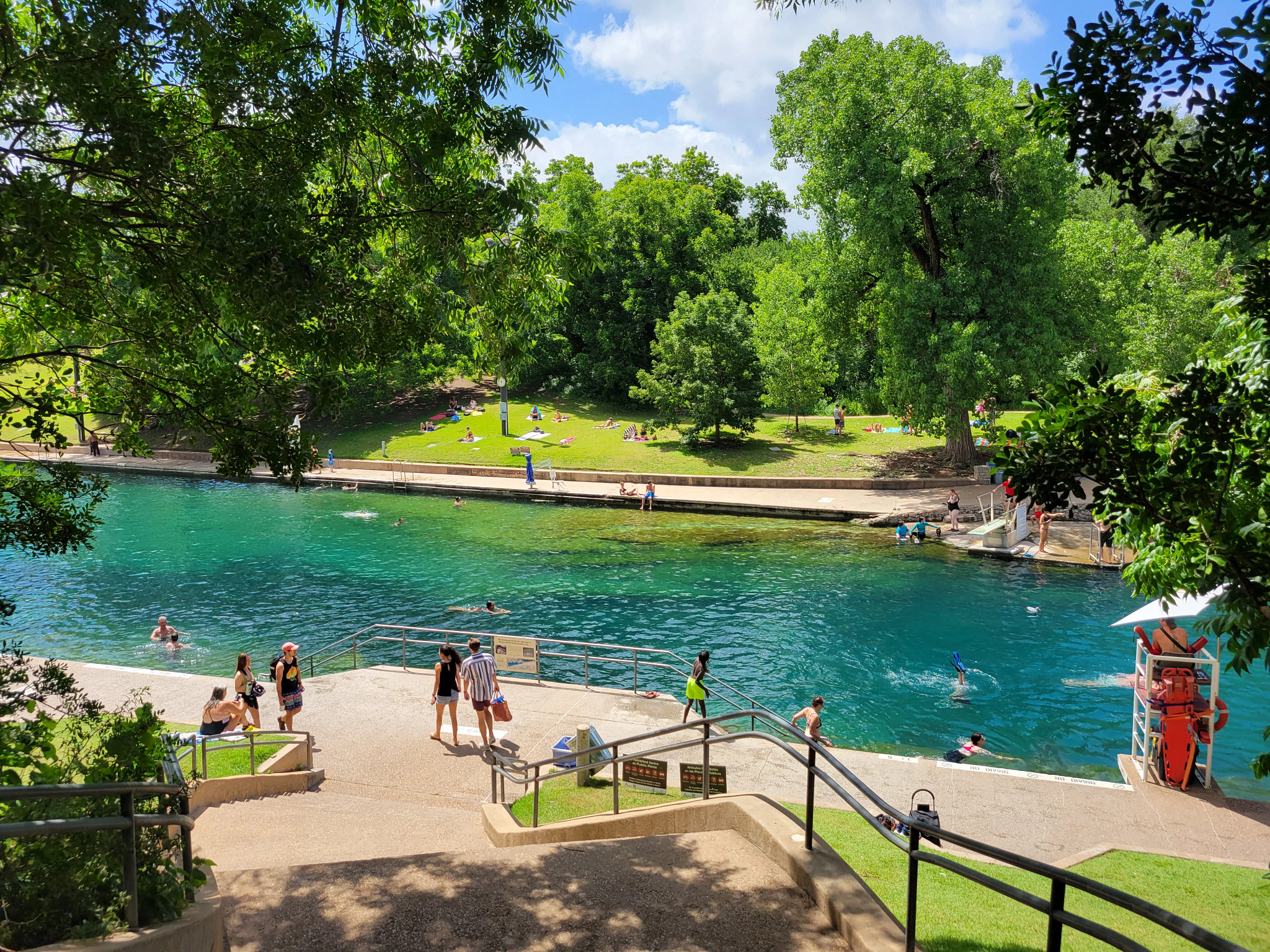
Dive into Austin's history at this historic district centered on Barton Springs Pool. Inhabited for 10,000 years, this lush oasis features refreshing 70-degree spring waters, a 1947 streamline moderne bathhouse, and a rich cultural legacy.
What is the history of the Barton Springs Archaeological and Historical District?
The district is centered on Barton Springs Pool in Zilker Metropolitan Park, with human activity and Native American occupation dating back approximately 10,000 years. The area was listed in the National Register of Historic Places in 1985.
Who is Barton Springs named after?
The springs are named for William "Uncle Billy" Barton, a settler who built a house near one of the springs circa 1837–1838 and encouraged visitors to swim and fish on his property.
How did the city of Austin acquire the land for the park?
The land was purchased in 1901 by Andrew Jackson Zilker, who deeded and sold parcels of the property to the City of Austin starting in 1917 and 1918 to ensure it would be used as a public park.
What did archaeological excavations find at the site?
Excavations in the area uncovered evidence of prehistoric life, including middens, camps, shelters, quarries, butchering sites, tools, artifacts, and points. These findings show that Native Americans were attracted to the site by its abundant plants, wildlife, and stone for toolmaking.
What is the temperature of the water at Barton Springs?
Fed by an underground aquifer, the springs stay a refreshing temperature of about 70 degrees Fahrenheit year-round.
What should I check before going?
Use Gyde for context, then check official sources for current hours, tickets, construction, and closures.
What to know
The Barton Springs Archaeological and Historical District, centered on the beloved Barton Springs Pool in Zilker Metropolitan Park, is a site of immense historical and cultural depth. Archaeological evidence reveals that human activity here began approximately 10,000 years ago. The area's abundant plants, wildlife, and a ready supply of stone for toolmaking made it highly attractive to Native Americans. Excavations at the site have uncovered ancient middens, camps, shelters, quarries, butchering sites, tools, and projectile points. Additionally, the nearby Vara Daniel Site, situated between lower Barton Creek and the Colorado River, contains a deeply stratified sequence of cultural deposits, with the oldest remains lying beneath the local soccer and rugby fields. Following Spanish rule, the springs came under the authority of the Mexican government in 1821. Modern occupation began around the time of Austin's founding. In 1837, settler William "Uncle Billy" Barton purchased the land surrounding the springs, informally naming them after his daughters, Parthenia and Eliza. Circa 1838, Barton built a home near one of the springs and welcomed visitors to swim and fish on his property, marking the beginning of the springs' legacy as a recreational retreat. In 1901, Andrew Jackson Zilker purchased the property. Through a series of transactions and donations between 1917 and 1931, Zilker deeded and sold the springs and surrounding acreage to the City of Austin to benefit the community and schools, ensuring it would remain a public park. The 1930s brought a major era of park development fueled by New Deal programs like the Civil Works Administration and the Civilian Conservation Corps. This era reconfigured the springs' surroundings, ushering in the famous "Rocksitters" era, when the pool became a vibrant meeting place for intellectuals and everyday citizens alike. Architecturally, the district is highlighted by a masonry "streamline moderne" bathhouse designed in 1947 by Dan Driscoll, which features a ticket booth and open-air dressing rooms. Beyond recreation, the springs served as a battleground for civil rights; in 1960, historic swim-ins successfully re-integrated the pool, paving the way for the integration of all Austin recreational facilities. Recognizing its profound legacy, the district was listed on the National Register of Historic Places in 1985, and later incorporated into the larger Zilker Park Historic District.
Visitor tips
- Prepare for a refreshing dip, as the spring-fed waters stay a constant 70 degrees year-round.
- Be sure to stop by the 1947 streamline moderne bathhouse to view its historic open-air dressing rooms and ticket booth.
- Look for the historical markers detailing the 1960 swim-ins that integrated Austin's public pools.
Nearby context
Located at 2100 Barton Springs Road, this historic district sits within Zilker Metropolitan Park, Austin's oldest metropolitan park. The surrounding parkland features sprawling soccer and rugby fields that cover deeply stratified archaeological sites like the Vara Daniel Site. This green lung of the city seamlessly connects the natural beauty of Barton Creek and the Colorado River with the bustling cultural life of south-central Austin.
Sources
Evidence and links
-
Vara Daniel Site: A Deeply Stratified Archaeological Treasure in Austin
The Vara Daniel Site, sometimes referred to as the Vera Daniel Site or Vera Daniels Site, is a deep, stratified sequence of cultural and na…
tshaonline.org -
Zilker Metropolitan Park | AustinTexas.gov
Zilker Metropolitan Park, located 2100 Barton Springs Road, is Austin’s oldest metropolitan park.
austintexas.gov -
A Brief History of Barton Springs Pool (from 2008 Master Plan)
In 1985 the Barton Springs Historic District was listed on the National Register of Historic Places.
zilkerneighborhood.org -
About Barton Springs | Living Springs
Fed by an underground aquifer, the springs stay a refreshing 70 degrees year-round.
livingspringsaustin.org -
Barton Springs Pool
Situated in Zilker Metropolitan Park amidst pecans, willows, and cottonwoods on rolling terrain, the use of these artesian springs on Barto…
tclf.org -
In Austin's Barton Springs Pool, History Lives On
Human activity at Barton Springs began about 10,000 years ago, and for centuries, the pool was a spiritual oasis for Indigenous communities.
afar.com