
Austin, Texas / History
Congress Avenue Historic District
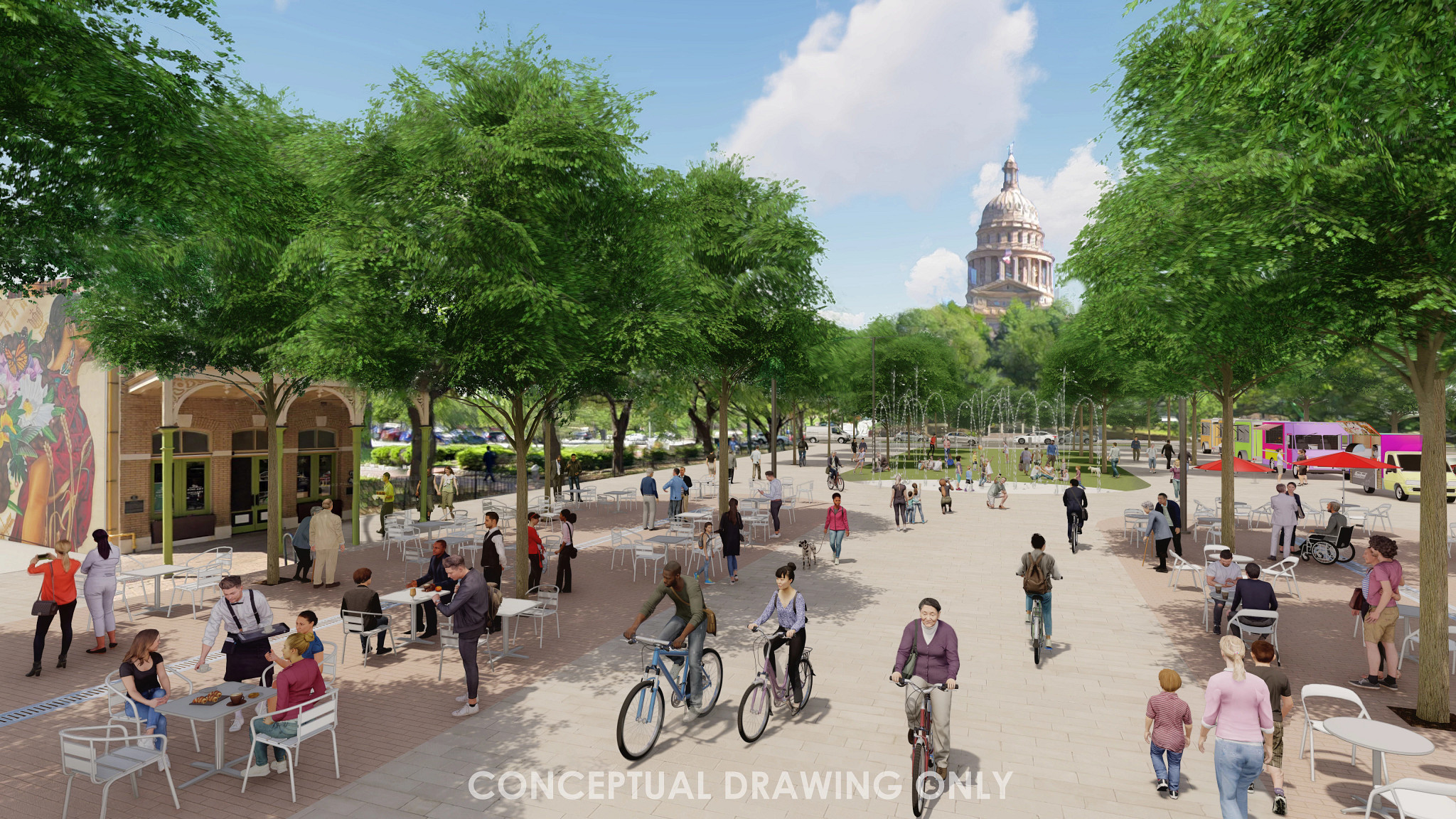
Stroll down the "Main Street of Texas," a historic 120-foot-wide boulevard established in 1839. This vibrant corridor connects Lady Bird Lake to the Texas State Capitol, showcasing stunning architecture and rich civic history.
What is the Congress Avenue Historic District?
The Congress Avenue Historic District is a prominent, historic area located on Congress Avenue between Cesar Chavez Street and 11th Street in Austin, Texas. Tracing its origins back to 1839, it serves as a ceremonial approach to the Texas State Capitol and is a major commercial, cultural, and civic corridor.
What architectural styles can you see along Congress Avenue?
The historic façades along the avenue display a remarkable variety of architectural styles, including Victorian, Romanesque, Gothic, Renaissance, Venetian, and Classical. Most of these historic buildings were constructed after 1871, following the arrival of the railroad which brought increased prosperity to Austin.
What types of events take place in the district?
Congress Avenue functions as a major site for public gatherings and events. It has a long history of hosting parades, demonstrations, athletic events, movie shoots, and street parties.
What should I check before going?
Use Gyde for context, then check official sources for current hours, tickets, construction, and closures.
What to know
The Congress Avenue Historic District traces its origins to 1839, when Mirabeau Lamar directed that a new capital city be built for the Republic of Texas. To realize this vision, Edwin Waller designed a symmetric 14-by-14 street grid bisected by a grand, 120-foot-wide boulevard. This prominent thoroughfare was designed as a ceremonial approach to the hilltop Capitol, dividing downtown Austin into two halves and running from the Colorado River to the Capitol's gates. While the avenue was laid out in 1839, much of its historic architectural fabric emerged after 1871, when the arrival of the railroad brought newfound prosperity to Austin. The mid-1870s introduced modern touches like gaslight illumination, mule-drawn streetcars, and a new Travis County Courthouse at Eleventh Street. Later, the dirt street was paved with bricks in 1910, and electric trolley cars operated along the avenue until 1940. Today, walking along Congress Avenue reveals an evolving cross-section of American architecture. The historic façades reflect a remarkable variety of styles, including Victorian, Romanesque, Gothic, Renaissance, Venetian, and Classical designs. In recognition of this rich architectural heritage, the stretch of Congress Avenue from Cesar Chavez Street to the Capitol was listed in the National Register of Historic Places in 1979. To preserve its iconic vistas, the Capitol view at the north end of the avenue became legally protected in 1983 under Capitol View Corridor rules. As the central spine of downtown Austin, Congress Avenue continues to serve as a bustling commercial and cultural corridor. It has long hosted major gatherings, including parades, demonstrations, athletic events, movie shoots, and street parties. Under the Downtown Austin Plan, the avenue is envisioned as the "Main Street of Texas," supported by the Congress Avenue Urban Design Initiative, which received funding through the city's 2012 and 2020 bond programs.
Visitor tips
- Walk the full stretch from Cesar Chavez Street near Lady Bird Lake up to 11th Street to experience the entire historic corridor.
- Look north from anywhere along the avenue to enjoy the iconic, legally protected view of the Texas State Capitol.
- Keep an eye out for the official historical marker erected near the avenue in 1989 by the Texas Historical Commission.
Nearby context
Situated in the heart of downtown Austin, the Congress Avenue Historic District serves as the city's central civic spine. As you explore this bustling corridor, you are just steps away from other unique local attractions, such as the Texas Toy Museum, which offers a nostalgic contrast to the grand 19th-century architecture of the avenue. This blend of historic preservation and modern entertainment makes the neighborhood a dynamic starting point for any Austin walking tour.
Sources
Evidence and links
-
Congress Avenue Historic District_08/11/1978
Congress Avenue has been the center of Austin since Edwin Waller laid out the city in a rigid and symmetrical grid plan in 1839.
thc.texas.gov -
Congress Avenue | Austin Transportation and Public Works
As the central spine of downtown Austin and the connection between Lady Bird Lake and the Texas State Capitol, Congress Avenue is arguably…
austintexas.gov -
Historic Buildings of Congress Avenue - Austin, TX
Mirabeau Lamar, successor to Sam Houston as president of the newborn Republic of Texas, directed that a city be built here in 1839, specifi…
austintexas.org -
Congress Avenue - The Historical Marker Database
Erected 1989 by Texas Historical Commission.
hmdb.org -
Congress Avenue Historic District - Guide To Austin Architecture
Established in 1839, this stretch of road, which divides Austin’s downtown grid into two halves, is the address of many of the city’s most…
guidetoaustinarchitecture.com -
Congress Avenue Historic District - Preservation Texas
Its birth can be traced to 1839 with Edwin Waller’s plan to build Texas' new capitol city.
preservationtexas.org