
Austin, Texas / History
Jeremiah Hamilton House
This unique, two-story triangular stone house was built in 1871 by Jeremiah Hamilton, a self-taught, formerly enslaved man who became one of Texas's first Black state legislators. It now stands as a historic cornerstone of Symphony Square.
What is the history of the Jeremiah Hamilton House?
The house was built in 1871 by Jeremiah Hamilton, a formerly enslaved African American man who taught himself to read and write. Hamilton served as a Reconstruction-era state representative from 1869 to 1871, making him one of the first Black men to serve in the Texas Legislature.
What is unique about the architecture of the house?
The building is an extant, two-story stone structure often referred to as a "triangular" or "stone-wedge" house. It is recognized as a unique architectural example in Texas and is located on the banks of Waller Creek.
Is the house historically recognized?
Yes, the house was listed on the National Register of Historic Places in 1976. Additionally, application materials have been submitted to the Texas Historical Commission requesting a historic marker for the property.
How is the property used today?
The house currently serves as the office for the Austin Symphony Orchestra. The Austin Symphony Orchestra Society entered a 50-year lease agreement for the property with the City of Austin in 1974.
What should I check before going?
Use Gyde for context, then check official sources for current hours, tickets, construction, and closures.
What to know
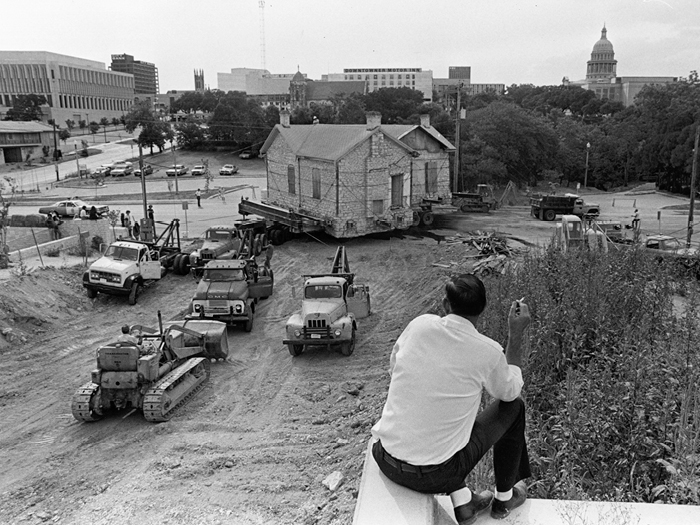
Jeremiah Hamilton was born in Tennessee in July 1838 and brought to Texas as an enslaved person in 1847. After being enslaved for nearly twenty years, he gained his freedom and remarkably taught himself to read and write. He went on to become a prominent Black political and civic leader, serving as a Reconstruction-era state representative from 1869 to 1871 in the 12th Texas Legislature, making him one of the first African American citizens to serve in the Texas Legislature. Following his legislative term, Hamilton worked as a carpenter. In 1871, he constructed his homestead on the banks of Waller Creek near 11th and Red River streets. The building, often referred to as the "triangular Hamilton House" or a "stone-wedge structure," is a unique two-story stone building recognized as a highly unusual architectural example in Texas. Some historical records also associate his carpentry work on the home with the year 1876. In 1971, the house became part of Symphony Square, which was planned as a southeastward extension of Waterloo Park. The complex originally integrated the Hamilton House alongside other historic structures, including the New Orleans Club, the William P. Hardeman House, and the Michael Doyle House, with a pavilion added to the site in the 1970s. In 1974, the Austin Symphony Orchestra Society signed a 50-year lease for the property, and the Hamilton House continues to serve as their office today. The home's historical significance was formally recognized in 1976 when it was listed on the National Register of Historic Places, and a historic marker application was later submitted to the Texas Historical Commission. Hamilton himself lived in Austin until around 1905, when his name and records disappeared from city directories. Though his death remains undocumented, his enduring stone-wedge homestead stands as a powerful monument to his extraordinary journey from enslavement to Texas lawmaker.
Visitor tips
- View the unique triangular limestone exterior from the sidewalks of Symphony Square near 11th and Red River streets.
- Please note that the interior is not open for public tours, as it serves as the working offices for the Austin Symphony Orchestra.
- Combine your visit with a walk through the surrounding Symphony Square and nearby Waterloo Park.
Nearby context
Located in downtown Austin's vibrant cultural district, the Jeremiah Hamilton House sits within Symphony Square along the scenic banks of Waller Creek. This historic pocket is highly walkable, positioned just steps away from legendary local institutions like Stubb's Bar-B-Q and Stubb's Waller Creek Amphitheater. It provides a quiet, reflective historical contrast to the bustling live music and dining scene that defines this corner of the city.
Sources
Evidence and links
-
Here's the unsung history of downtown Austin's famous Symphony Square - CultureMap Austin
Symphony Square was originally home to Jeremiah Hamilton, who was enslaved for almost 20 years before becoming a free man
austin.culturemap.com -
Historic Marker Application: The Jeremiah Hamilton House - Texas History Portal
Application materials submitted to the Texas Historical Commission requesting a historic marker for the Jeremiah Hamilton House, in Austin,…
texashistory.unt.edu -
History of Symphony Square - Waterloo Greenway Conservancy
Symphony Square was planned as a southeastward extension of Waterloo Park on both sides of East 11th Street east of Red River Street starti…
waterloogreenway.org -
Jeremiah Hamilton House - Community Impact
After his term, he stayed in Austin, working as a carpenter, notably constructing the 1876 Jeremiah Hamilton House
communityimpact.com -
The Triangular House the Enslaved Legislator Built tshaonline.org