
Austin, Texas / History
Pecan Street / Sixth Street
Once known as Pecan Street, Austin’s historic Sixth Street is a vibrant downtown entertainment district famous for its preserved Victorian architecture, diverse cultural roots, and legendary live music scene.
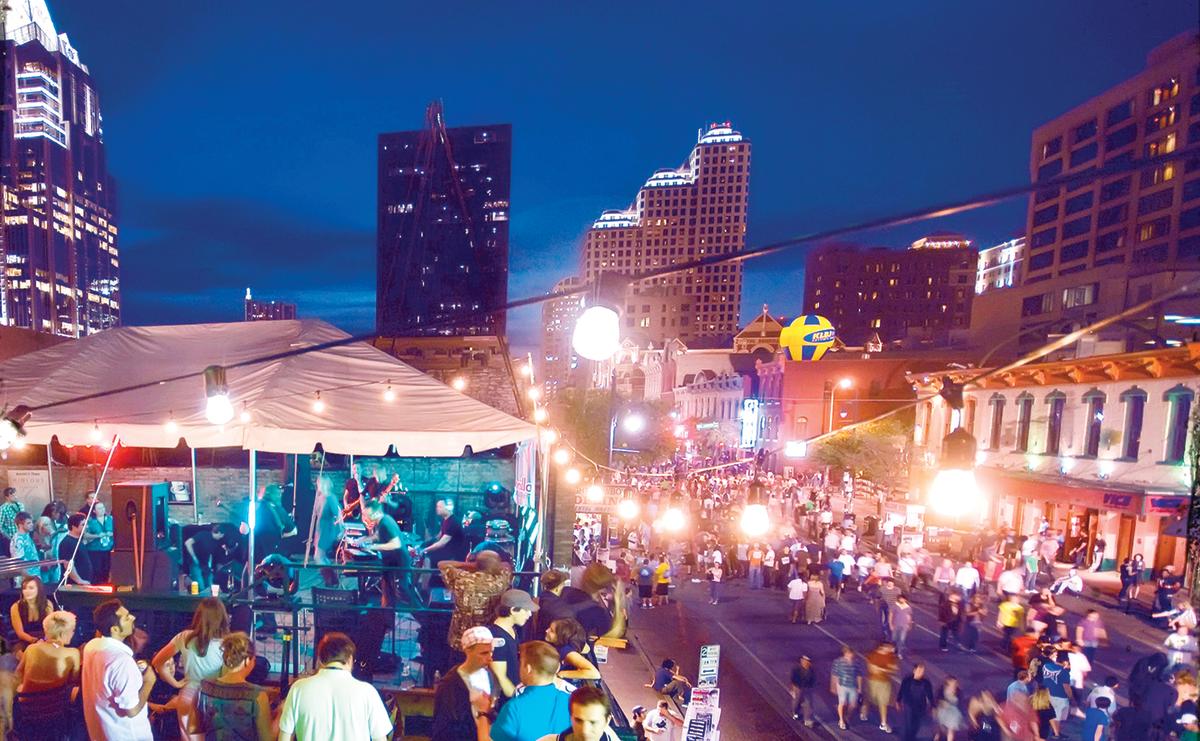
What is Pecan Street / Sixth Street known for?
Pecan Street, now known as Sixth Street, is a historic street and major entertainment district in downtown Austin. It is famous for its vibrant cultural scene, featuring over 80 live music venues, restaurants, bars, art galleries, and historic Victorian commercial architecture.
Why is it called both Pecan Street and Sixth Street?
Under Austin's older street-naming convention designed by Edwin Waller, east-west streets were originally named after trees, with Sixth Street being named Pecan Street. This naming decision was later reversed in 1884, and the streets were renamed with numbers, though the original name is still honored by events like the Pecan Street Festival.
What kind of architecture can I see along the historic district?
The district features a high concentration of turn-of-the-century, two- or three-story masonry Victorian commercial buildings dating from the late 1800s and early 1900s. Notable architectural landmarks along the street include the elegant Driskill Hotel and the Morley Bro’s Drug Store Building.
What major festivals are hosted on Sixth Street?
The historic street hosts several major events, including the biannual Pecan Street Festival, which is one of the nation's largest art and music festivals. It also hosts Austin's annual South by Southwest (SXSW) Festival.
What should I check before going?
Use Gyde for context, then check official sources for current hours, tickets, construction, and closures.
What to know
Originally mapped in 1839 by Edwin Waller, this historic avenue was first named Pecan Street under Austin's original street-naming convention, which designated east-west streets after trees and north-south streets after Texas rivers. The street officially became Sixth Street in 1884. In Austin's earliest days, the intersection of Pecan Street and Congress Avenue served as the town's epicenter. Developed in the late 1800s as a major commercial corridor, the district is famous for its Victorian charm. Listed on the National Register of Historic Places on December 30, 1975, the district features a six-block stretch of turn-of-the-century, two- and three-story masonry Victorian commercial buildings. Preservationists claim this area hosts the largest concentration of Victorian commercial architecture west of the Mississippi, anchored by historic landmarks like the elegant Driskill Hotel and the Morley Bro’s Drug Store Building. Long before Austin became the Live Music Capital of the World, the street was a diverse cultural hub and a multi-ethnic, multi-racial commercial zone. European, Middle Eastern, Asian, and African American entrepreneurs operated small businesses side-by-side. For instance, what is now Pete’s Dueling Piano Bar was once a carriage shop operated by Italian immigrant Michael Paggi from 1875 to 1905. Directly across the street from modern-day Esther’s Follies, former enslaved person E. H. Carrington and his son-in-law D. H. Lyons ran a highly successful grocery store from 1873 into the 1940s. After experiencing a decline due to the 1928 City Plan and changing demographics, the street experienced a resurgence in the 1960s driven by historic preservation. Since the 1970s, it has thrived as a major entertainment district. Today, these historic buildings house restaurants, cafes, art galleries, tattoo parlors, and over 80 live music venues. The street's rich history is celebrated annually during the massive South by Southwest Festival and the biannual Pecan Street Festival, which proudly keeps the street's original name alive.
Visitor tips
- Visit during the biannual Pecan Street Festival or the annual South by Southwest Festival to experience the street at its liveliest.
- If dining on West 6th at the Pecan Square Café, plan around their lunch hours from 11am to 3pm Monday through Friday, or weekend brunch during the same hours.
- Look out for historic landmarks like the Driskill Hotel and the Morley Bro’s Drug Store Building as you walk the historic district.
Nearby context
Located in the urban core of downtown Austin, Pecan Street—now Sixth Street—serves as the historic spine of the city's commercial district. Its intersection with Congress Avenue was once the absolute epicenter of early Austin. Today, this bustling corridor connects the historic downtown core with the modern entertainment districts of West Sixth and Fourth Street, making it a perfect starting point for exploring Austin's architectural heritage and legendary nightlife.
Sources
Evidence and links
-
History of Pecan Street - Austin
Sixth Street (formerly known as Pecan Street) is lined with many historical houses and commercial buildings dating from the late 1800's and…
pecanstreetfestival.org -
Pecan Square Café
1200 B West 6th Street, Austin, TX 78703
pecansquarecafe.com -
Your Guide to Historic 6th Street in Austin, Texas
Historic Sixth Street (Pecan Street). Walking the 500-700 blocks of East Sixth Street reveals the storied roots of Austin's business commun…
austintexas.org -
East Sixth Street Historic District | SAH Archipedia
Formerly known as Pecan Street, the historic avenue appeared on Edwin Waller's first maps of Austin as early as 1839. Pecan Street became S…
sah-archipedia.org -
Pecan to Dirty Sixth - Austin
The history of Austin's iconic Sixth Street, originally known as Pecan Street, is a captivating story of resilience, revitalization, and co…
nchmuseum.org -
Sixth Street (Austin)
Sixth Street was formerly named Pecan Street under Austin's older naming convention
en.wikipedia.org