
Austin, Texas / History
Texas African American History Memorial
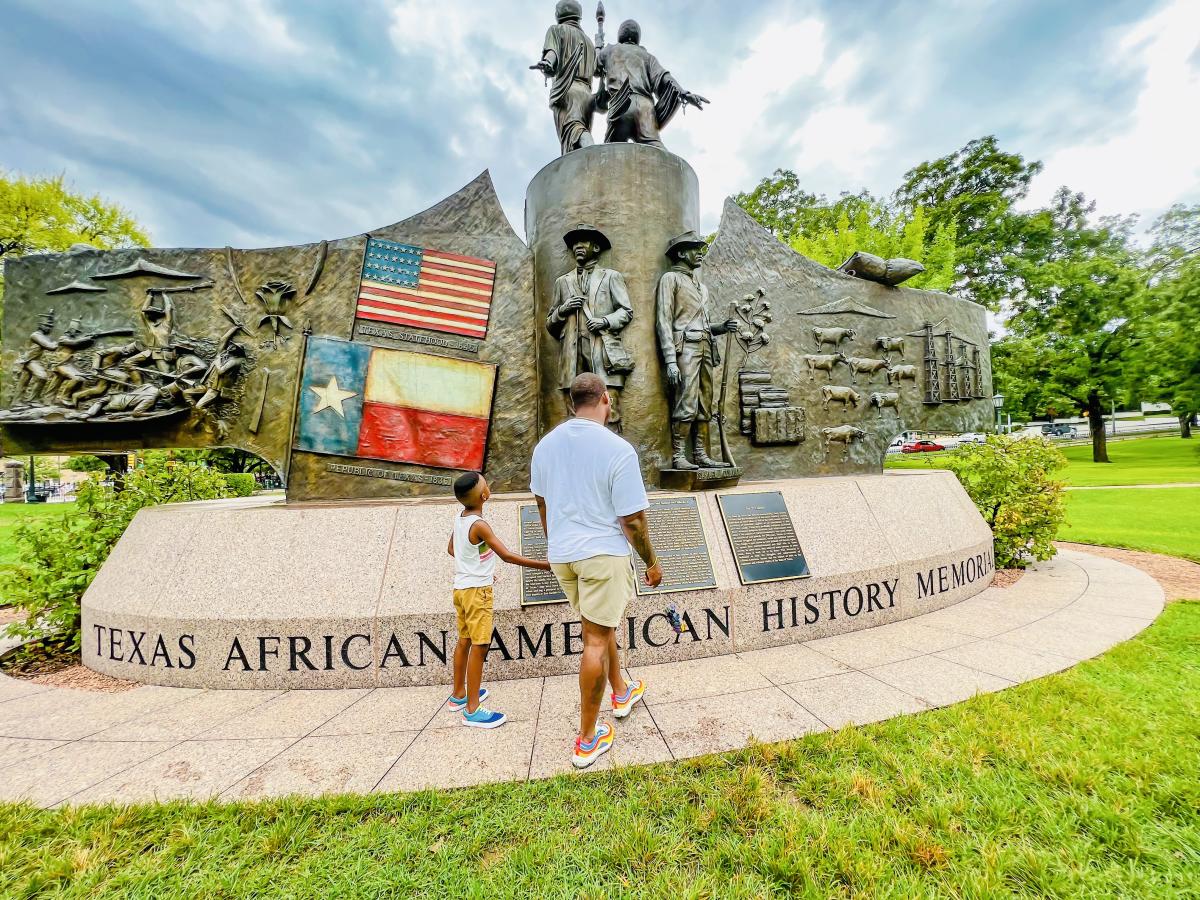
Located on the Texas State Capitol grounds, this striking 27-foot-tall bronze monument by sculptor Ed Dwight chronicles African American history in Texas from the 1500s to modern times, highlighting Juneteenth and key historical figures.
What is the Texas African American History Memorial and where is it located?
The Texas African American History Memorial is an outdoor monument that commemorates the impact and contributions of African Americans in Texas. It is located on the southwest grounds of the Texas State Capitol in Austin, Texas.
What does the monument depict?
The monument features a two-sided bronze panorama depicting African American history from the 1500s to the present. It highlights key historical moments like Juneteenth (the emancipation of enslaved African Americans on June 19, 1865), contributions to industries like cattle, cotton, and oil, and notable figures such as Hendrick Arnold, Barbara Jordan, and the Buffalo Soldiers.
Who created the memorial and when was it installed?
The memorial was proposed and sculpted by Denver-based sculptor Ed Dwight. It was erected by the Texas African American History Memorial Foundation and unveiled in 2016.
What are the physical dimensions of the monument?
The monument stands 27 feet high and is 32 feet wide.
What should I check before going?
Use Gyde for context, then check official sources for current hours, tickets, construction, and closures.
What to know
Located on the southwest grounds of the Texas State Capitol in Austin, the Texas African American History Memorial is a powerful outdoor monument commemorating the impact of African Americans in Texas. Sculpted by Denver-based artist Ed Dwight and erected in 2016, this impressive structure stands 27 feet high and 32 feet wide. Notably, it was the last monument allowed to be erected on the South Capitol grounds under current law.\n\nThe path to creating this memorial began two decades before its unveiling, when then-Governor George W. Bush signed the initial legislation to start the project. The memorial ultimately carried a $3 million price tag. To cover these costs, the Texas African American History Memorial Foundation raised private funds, while state lawmakers authorized $1.5 million to cover the remaining expenses.\n\nThe monument features a massive, two-sided bronze panorama that chronicles the history of Black people in Texas, a history that pre-dates the United States, stretching from the 1500s all the way to the present. The central portion of the memorial dramatically depicts Juneteenth on June 19, 1865, when African Americans in Texas were finally freed from the bonds of slavery. Because of this central focus, the memorial is popularly known as the Juneteenth Monument.\n\nThrough its detailed bronze reliefs, the monument tells the story of African Americans from enslavement and emancipation to their major contributions in industries like cattle, cotton, and oil. The memorial also celebrates modern achievements in the arts and sciences. It features tributes to prominent Texans and pioneering figures, including Texas Revolutionary fighter Hendrick Arnold, the Buffalo Soldiers, and modern leader Barbara Jordan.
Visitor tips
- Look for the monument on the southwest grounds of the Texas State Capitol.
- Be sure to walk around both sides of the memorial to view the complete two-sided bronze panorama.
- Since this is an outdoor monument, plan your visit during daylight hours to fully appreciate the details of the bronze sculptures.
Nearby context
Situated on the southwest grounds of the Texas State Capitol, this memorial is perfectly situated for exploring Austin's historic core. Just a short walk away, you can dive deeper into local heritage at the Capitol Visitors Center or view the historic Texas Governor’s Mansion nearby. Together, these landmarks offer a comprehensive look at the diverse political and cultural history of the Lone Star State.
Sources
Evidence and links
-
Texas African American History Memorial - Austin, TX
The Memorial, created by scupltor Ed Dwight, is located on the southwest grounds of the Texas State Capitol and was the last monument erect…
austintexas.org -
Texas African American History Memorial - SPB
The central portion of the memorial dramatically depicts Juneteenth in Texas: June 19, 1865 when African Americans were freed from the bond…
tspb.texas.gov -
Top Things to Explore Black History in Austin, Texas Year-Round - Black Austin Tours
Unveiled in 2016, this monument features a two-sided bronze panorama that tells the story of African Americans in Texas, from enslavement a…
blackaustintours.com -
Juneteenth Monument Texas African American History Memorial - The Reconstruction Era
While the official name of this monument is the Texas African American History Memorial, it is popularly known as the Juneteenth Monument.
thereconstructionera.com -
Texans remember, rejoice during African-American monument's unveiling - Texas Tribune
The current project carried a $3 million price tag. The Texas African American History Memorial Foundation raised some of the funds, while…
texastribune.org -
Texas African American History Memorial - Wikipedia
The Texas African American History Memorial is an outdoor monument commemorating the impact of African Americans in Texas, installed on the…
en.wikipedia.org