
New Orleans, Orleans Parish / History
Wedding Cake House
A stunning 13,000-square-foot Victorian Revival mansion in the Garden District, famous for its tiered white balconies and ornate classical details that resemble a giant wedding cake.
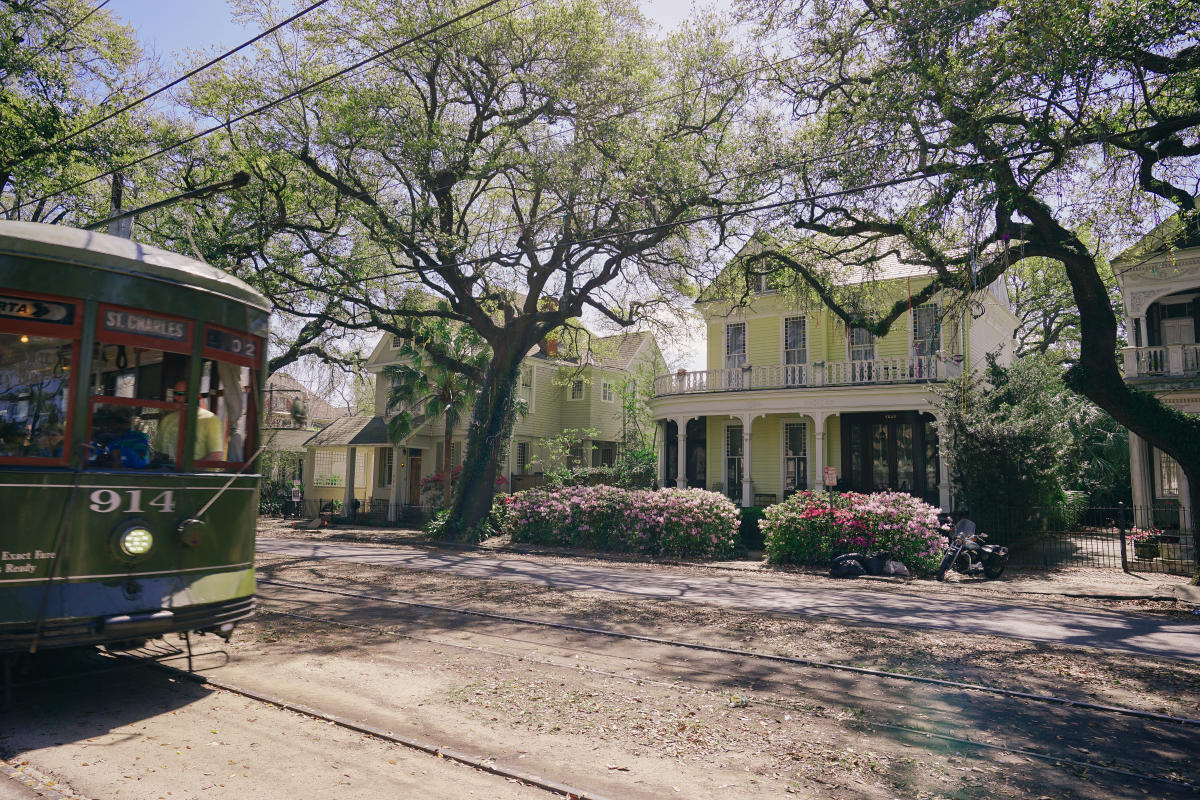
What is the Wedding Cake House known for?
It is a prominent Victorian Revival and Colonial Revival mansion known for its all-white exterior, tiered appearance, and profuse decoration that make it resemble a huge wedding cake.
Where is the Wedding Cake House located?
The house is located in New Orleans' Garden District on St. Charles Avenue, specifically at the corner of Rosa Park and St. Charles.
What is the history of the house?
Built in 1896 for local grocer and banker Nicholas Burke, the 13,000-square-foot mansion was rebuilt in 1907 after being severely damaged by an electrical fire.
What are the architectural features of the building?
The three-story building features Corinthian columns, layered balconies, and a gallery supported by clustered columns with Ionic capitals. Its design includes classical urn finials, scrolled brackets, gooseneck gables, and elaborate dormers.
What should I check before going?
Use Gyde for context, then check official sources for current hours, tickets, construction, and closures.
What to know
Located at the corner of Rosa Park and St. Charles Avenue, the Wedding Cake House is one of the most prominent residences in New Orleans’ Garden District. Built in 1896 for Nicholas Burke, a successful local grocer and banker who helped found the Hibernia National Bank, the mansion serves as a striking example of Colonial Revival and Victorian Revival architecture. The building spans three stories and covers 13,000 square feet, standing as a testament to the wealth of the city's late 19th-century merchant class. The home earned its whimsical nickname from its tiered appearance and a uniform white exterior. This aesthetic is achieved through layers of balconies, cornices, and columns that mimic the frosting of a tiered cake. The architectural detail is profuse, featuring Corinthian columns and a single-story gallery supported by clustered columns with Ionic capitals. These structural elements are further embellished with decorative garlands and friezes. Visitors will notice intricate classical flourishes throughout the facade. The gallery balustrades are punctuated by finials shaped like classical urns, while the window surrounds feature scrolled brackets, moldings, and gooseneck gables. The roofline is equally elaborate, boasting detailed dormers that complete the house's ornate silhouette. Despite its current grandeur, the mansion faced a significant tragedy in 1907 when an electrical fire severely damaged the structure. Following this event, the house was rebuilt and restored, ensuring that its unique architectural flourishes remained a permanent fixture of the St. Charles Avenue landscape.
Visitor tips
- Walk the perimeter of the block to see the gooseneck gables and urn finials from different angles.
- Visit during the morning or late afternoon for the best lighting on the white facade.
- Combine this stop with a stroll down St. Charles Avenue to see other historic Garden District mansions.
Nearby context
The Wedding Cake House is a centerpiece of the Garden District, situated on the historic St. Charles Avenue. It stands alongside other architectural landmarks like The Elms Mansion and Gallier Hall, contributing to the neighborhood's reputation as a haven for architecture buffs.
Sources
Evidence and links
-
St. Charles Avenue | New Orleans Streets to Visit
Architecture buffs will fawn over sites like Gallier Hall, The Elms Mansion, and the Wedding Cake House at the corner of Rosa Park and St.…
neworleans.com -
5809 St. Charles Ave, New Orleans, LA | Roofing Projects - Durable Slate Company
Affectionately dubbed “The Wedding Cake House”, this 3-story 13,000 square foot building resembles a tiered wedding cake, thanks to its min…
durableslate.com -
Nicholas Burke House | SAH Archipedia
Known as the “wedding cake” house because of its tiered appearance, profuse decoration, and all-white exterior
sah-archipedia.org -
Wedding Cake House in New Orleans, LA (7 Photos) - Fotospot.com
The Wedding Cake House is located in New Orleans, LA on St. Charles Avenue in the Garden District.
fotospot.com