
New York City, New York / Museums
Andrew Carnegie Mansion
A palatial 64-room Georgian Revival estate built for steel magnate Andrew Carnegie, now serving as the Cooper Hewitt, Smithsonian Design Museum on Manhattan's Upper East Side.
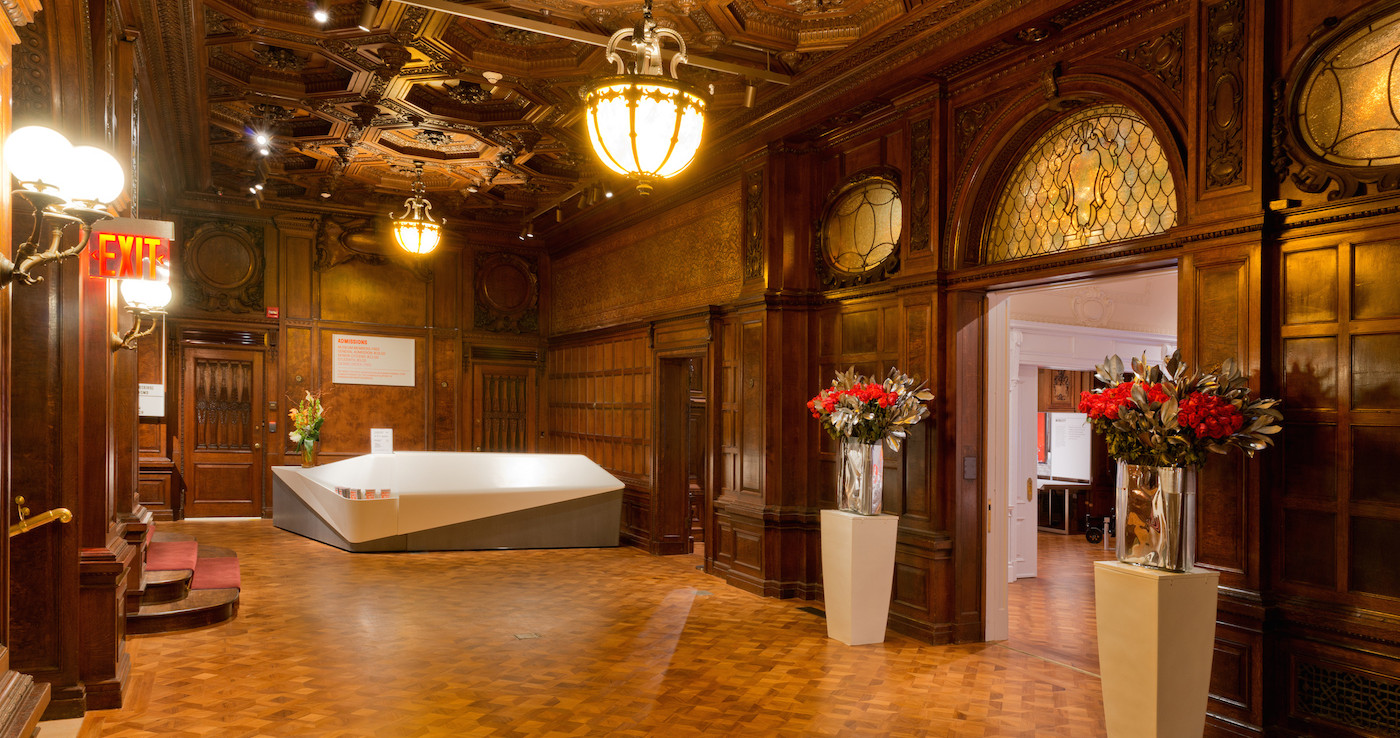
Where is the Andrew Carnegie Mansion located?
The mansion is located at 2 East 91st Street on the Upper East Side of Manhattan in New York City.
What is the Andrew Carnegie Mansion known for today?
It now serves as the home of the Cooper Hewitt, Smithsonian Design Museum, which is described as the only museum of its kind in the United States.
What is the history of the mansion?
Built between 1899 and 1902 for industrialist Andrew Carnegie, his wife Louise, and their daughter Margaret, it served as the family residence until 1946. In 1972, it was donated to the Smithsonian Institution and opened as a museum in 1976.
What are the architectural features of the building?
The 64-room mansion was designed by Babb, Cook & Willard in the Georgian Revival style with Beaux Arts accents. It is a three-and-a-half-story brick-and-stone building featuring steel-frame construction and advanced mechanical systems, including central air conditioning.
Is the mansion a protected landmark?
Yes, the mansion is both a New York City designated landmark (designated in 1974) and a National Historic Landmark.
What should I check before going?
Use Gyde for context, then check official sources for current hours, tickets, construction, and closures.
What to know
Located at 2 East 91st Street, the Andrew Carnegie Mansion is a three-and-a-half-story brick-and-stone masterpiece. Designed by the architecture firm Babb, Cook & Willard, the residence was constructed between 1899 and 1902. It served as the primary home for industrialist Andrew Carnegie, his wife Louise Whitfield Carnegie, and their daughter Margaret until 1946. The estate is an architectural marvel of the Georgian Revival style, featuring Beaux Arts accents and a groundbreaking steel-frame construction. At the time of its completion in 1902, the 64-room mansion was notable for its advanced mechanical systems, which included the luxury of central air conditioning. This palatial home was situated on Prospect Hill, an area now known as the Carnegie Hill Historic District. In 1972, the Carnegie Corporation transferred the mansion and its grounds to the Smithsonian Institution. This transition allowed the building to become the home of the Cooper-Hewitt Museum, which officially opened its doors in 1976. The institution was later renamed the Cooper Hewitt, Smithsonian Design Museum in 2014, and is recognized as the only museum of its kind in the United States. Preservation efforts have ensured the mansion's longevity, as it was designated a New York City landmark in 1974. It also holds the prestige of being a National Historic Landmark. Today, visitors can explore the intersection of philanthropy and industry within these historic walls, while the exterior continues to showcase the grandeur of Manhattan's Gilded Age.
Visitor tips
- Check the museum's Instagram page for a virtual tour of the Carnegie Mansion if you are short on time.
- Wear comfortable walking shoes as the museum is housed in a massive 64-room estate.
- Allocate at least two hours to appreciate both the historic architecture and the design exhibits.
Nearby context
The mansion is a cornerstone of the Carnegie Hill Historic District on the Upper East Side, situated along the east side of Fifth Avenue.
Sources
Evidence and links
-
About the Carnegie Mansion | Cooper Hewitt, Smithsonian Design Museum
The 64-room mansion, built from 1899 to 1902, is an impressive testament to the desire of Carnegie and his wife, Louise Whitfield Carnegie,…
cooperhewitt.org -
Andrew Carnegie Mansion - NYC Landmarks Preservation Commission designation PDF
February 19, 19'r4, Number 4 LP-0674 ANDREW CARNEGIE MANSION, 2 East 9lst Street, Borough of Hanhattan .
s-media.nyc.gov -
Andrew Carnegie Mansion, Pergola, 2 East 91st Street, New York County, NY
Andrew Carnegie Mansion, Pergola, 2 East 91st Street, New York County, NY
loc.gov -
The Carnegie Mansion | Cooper Hewitt, Smithsonian Design Museum
The 64-room mansion was built from 1899 to 1902.
cooperhewitt.org -
The Carnegies at Home II (Smithsonian Archives PDF)
Steel magnate and philanthropist Andrew Carnegie’s palatial mansion on Prospect Hill (now Carnegie Hill Historic District in New York City)…
siarchives.si.edu -
Andrew Carnegie Mansion - Wikipedia
The Andrew Carnegie Mansion is a historic house and a museum building at 2 East 91st Street, along the east side of Fifth Avenue, on the Up…
en.wikipedia.org