
New York City, New York / Landmarks
Brooklyn Bridge
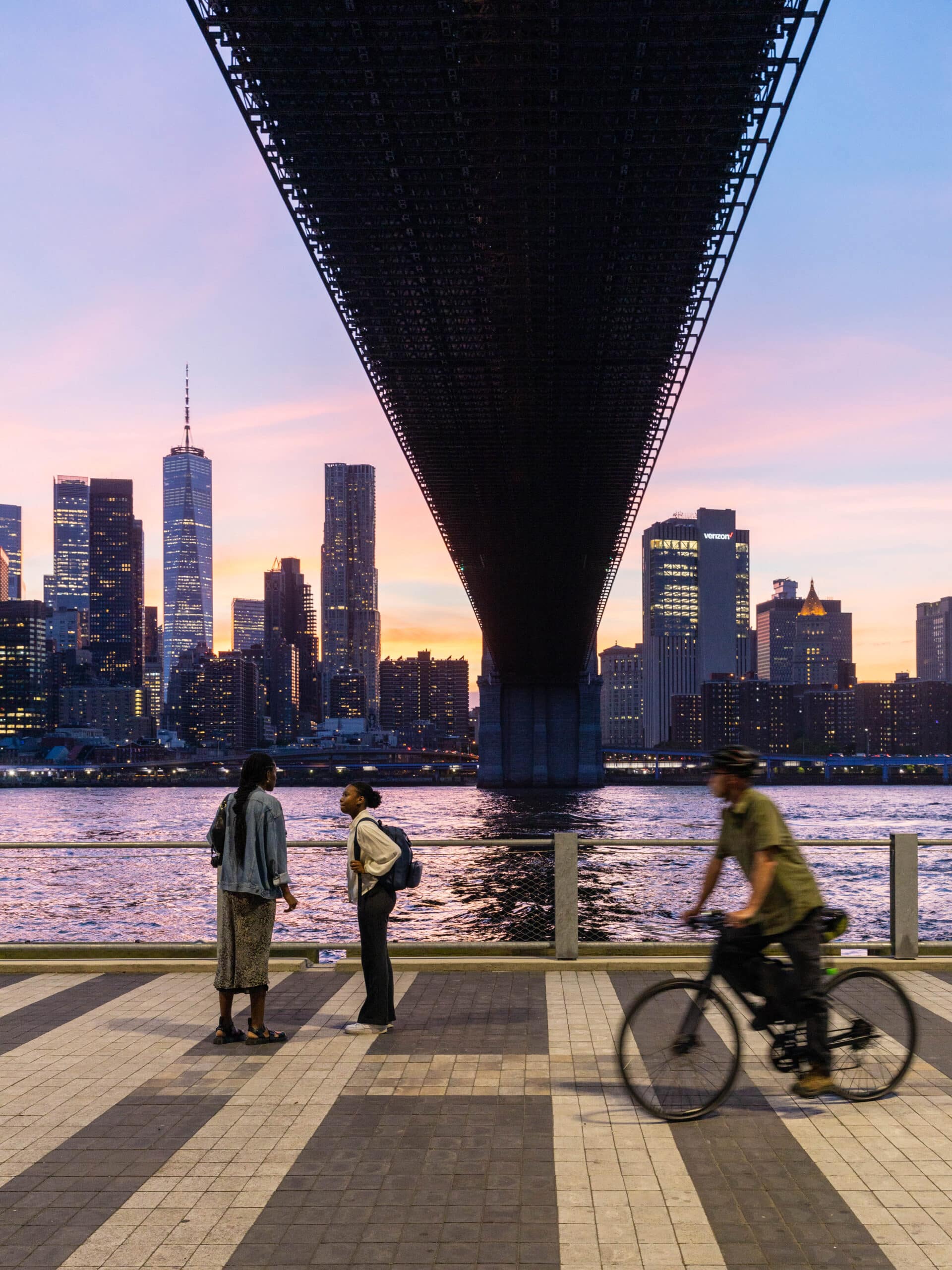
An architectural marvel connecting Lower Manhattan and Brooklyn Heights, this iconic suspension bridge offers a signature pedestrian promenade with breathtaking views of the East River and the New York City skyline.
What is the Brooklyn Bridge known for?
The Brooklyn Bridge is known for its stone arches and was the longest suspension bridge in the world when it opened in 1883.
Is it free to visit the Brooklyn Bridge?
Yes, visiting the Brooklyn Bridge is free.
How do I get onto the Brooklyn Bridge?
On the Manhattan side, the entrance is at Park Row and Centre Street. On the Brooklyn side, you can enter at Cadman Plaza East or where Boerum Place meets Tillary Street.
What can I do on the Brooklyn Bridge?
Visitors can walk across the elevated pedestrian promenade or use the protected bicycle path.
Who designed the Brooklyn Bridge and when was it built?
The bridge was designed by John A. Roebling. Construction began in 1869 and was completed in 1883.
What should I check before going?
Use Gyde for context, then check official sources for current hours, tickets, construction, and closures.
What to know
The Brooklyn Bridge is a monumental feat of engineering that connects Lower Manhattan and Brooklyn Heights across the East River. Designed by John A. Roebling, construction on the massive project began in 1869 and reached completion in 1883. Upon its opening on May 24, 1883, it became the first fixed crossing of the East River and held the title of the longest suspension bridge in the world. Architecturally, the bridge is distinguished by its grand stone arches. It features a complex layout that supports five lanes of vehicle traffic—specifically excluding trucks—alongside a protected bicycle path and an elevated pedestrian promenade. This promenade is considered a signature visitor experience, allowing walkers to traverse a main span of 1,595.5 feet while suspended 127 feet above mean high water. Originally known as the East River Bridge or the New York and Brooklyn Bridge, the structure was officially renamed the Brooklyn Bridge in 1915. Today, it remains a vital transit artery, averaging 103,051 vehicles, 28,845 pedestrians, and 5,504 cyclists every single day. Visitors arriving from the Manhattan side can enter at Park Row and Centre Street, located across from City Hall Park. Those arriving from the Brooklyn side can access the bridge at Cadman Plaza East or at the intersection of Boerum Place and Tillary Street.
Visitor tips
- Enter from Manhattan at Park Row and Centre Street to walk toward the Brooklyn skyline.
- Use the protected bicycle path if you are cycling, but keep to the pedestrian promenade for sightseeing.
- Combine your visit with a trip to Brooklyn Bridge Park, which is open daily from 6 AM to 1 AM.
Nearby context
The bridge serves as the primary link between the civic center of Lower Manhattan and the waterfront of Brooklyn Heights. On the Brooklyn side, it leads directly toward Brooklyn Bridge Park, a 1.3-mile waterfront treasure stretching from the Columbia Heights district to DUMBO.
Sources
Evidence and links
-
Brooklyn Bridge - NYC Tourism + Conventions
Stretching across the East River, the iconic Brooklyn Bridge opened up back in 1883 to carry traffic (nonautomotive at the time) between Lo…
nyctourism.com -
Brooklyn Bridge Park - NYC Parks
Spanning over 1.3 miles of Brooklyn’s waterfront, from the Columbia Heights waterfront district to the Manhattan Bridge in DUMBO, this trea…
nycgovparks.org -
Brooklyn Bridge Park: Home
Open 7 Days a Week | 6AM - 1AM
brooklynbridgepark.org -
NYC DOT - Brooklyn Bridge
The iconic Brooklyn Bridge connects Lower Manhattan and Brooklyn Heights.
nyc.gov -
Brooklyn Bridge - Wikipedia
Opened on May 24, 1883, the Brooklyn Bridge was the first fixed crossing of the East River.
en.wikipedia.org