
New York City, New York / History
The Cooper Union Foundation Building
An iconic 1859 Renaissance Revival landmark in Manhattan's East Village, founded by Peter Cooper to provide accessible education in art, architecture, and engineering.
What is The Cooper Union Foundation Building known for?
It is a New York City and National Historic Landmark that served as a meeting place for intellectuals, inventors, and tinkerers. It is also known for its Great Hall, which was the largest secular meeting room in New York when it opened.
Can I tour the building?
The Foundation Building is not generally open for public touring, although access may be provided through public programs and exhibitions.
What is the history of the building?
Opened in 1859 and founded by Peter Cooper, the building marked the creation of The Cooper Union. It is notable for hosting one of Abraham Lincoln's most famous appearances on February 27, 1860.
What are the architectural features of the building?
Designed by Frederick A. Petersen, it is a five-story Renaissance Revival structure (also described as an Italianate brownstone or palazzo). At the time of its construction, it was one of the tallest buildings in lower Manhattan and featured a cylindrical shaft built in anticipation of the elevator, which had not yet been invented.
Where is it located?
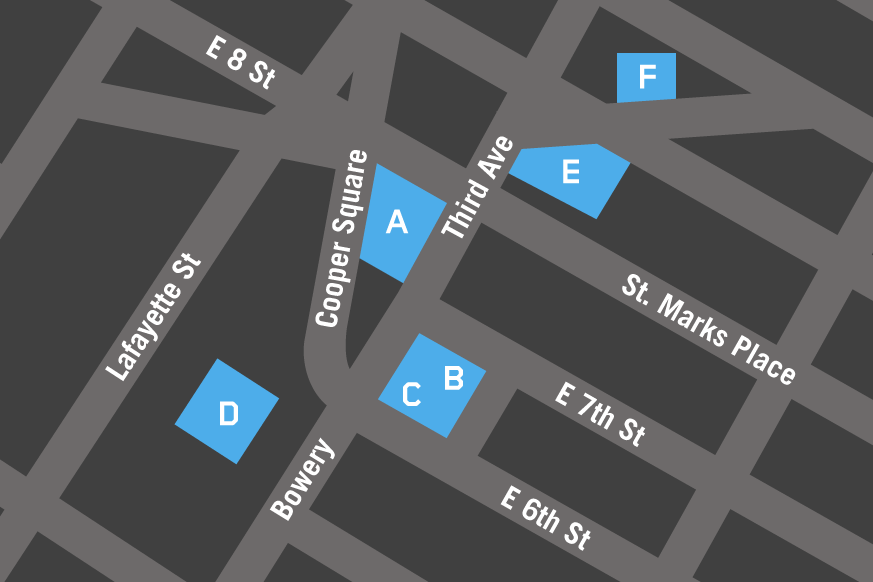
The building is located in Manhattan, specifically in New York City's East Village.
What should I check before going?
Use Gyde for context, then check official sources for current hours, tickets, construction, and closures.
What to know
The Cooper Union Foundation Building is a five-story Renaissance Revival structure designed by Frederick A. Petersen. Opened in 1859, it marked the creation of The Cooper Union for the Advancement of Science and Art, one of the nation's oldest and most distinguished institutions of higher education. At the time of its erection, the building was one of the tallest in lower Manhattan, designed as an Italianate palazzo to honor and elevate its beneficiaries. Following Peter Cooper's educational philosophy, the original design placed studios and classrooms above a first floor of stores open to the public. This layout emphasized the integration of education and commerce. The building's most significant feature is the Great Hall, located in the basement. When it opened, the Great Hall was the largest secular meeting room in New York, seating 900 people. Throughout its history, the building has served as a meeting place for intellectuals, inventors, and people from across all social strata. It is now a New York City Exterior Landmark and a National Historic Landmark. The site is renowned for hosting historic events, such as Abraham Lincoln's famous appearance on February 27, 1860. One of the most intriguing architectural details is a cylindrical shaft between floors. Peter Cooper insisted on its inclusion in anticipation of an elevator, a device that had not yet been invented at the time of construction.
Visitor tips
- The building is not generally open for public touring; check for free or low-cost public programs and exhibitions to gain interior access.
- Focus on the Italianate brownstone facade to appreciate the Renaissance Revival style.
- Allow about 20 minutes to explore the exterior and read about its historical significance.
Nearby context
Located in the East Village, the Foundation Building anchors a campus that continues to grant degrees in art, architecture, and engineering today.
Sources
Evidence and links
-
Facilities and Resources | Cooper Union
The five-story Foundation Building was designed by Frederick A. Petersen in the Renaissance Revival style, with studios and classrooms abov…
cooper.edu -
Foundation Building | Cooper Union
The Foundation Building opened in 1859 and marked the creation of The Cooper Union.
cooper.edu -
History | Cooper Union
The Cooper Union for the Advancement of Science and Art, established in 1859, is among the nation's oldest and most distinguished instituti…
cooper.edu -
The Cooper Union for the Advancement of Science and Art
The Cooper Union, est. 1859, grants degrees in art, architecture and engineering and offers courses in continuing education in New York Cit…
cooper.edu -
Cooper Union - Wikipedia
Cooper Union's Foundation Building is an Italianate brownstone building designed by architect Fred A. Petersen, one of the founders of the…
en.wikipedia.org -
Cooper Union Foundation Building - Museum Without Walls
Designed by architect Frederick Peterson, the Foundation Building opened in 1859.
culturenow.org