
San Francisco, California / Landmarks
Aquatic Park
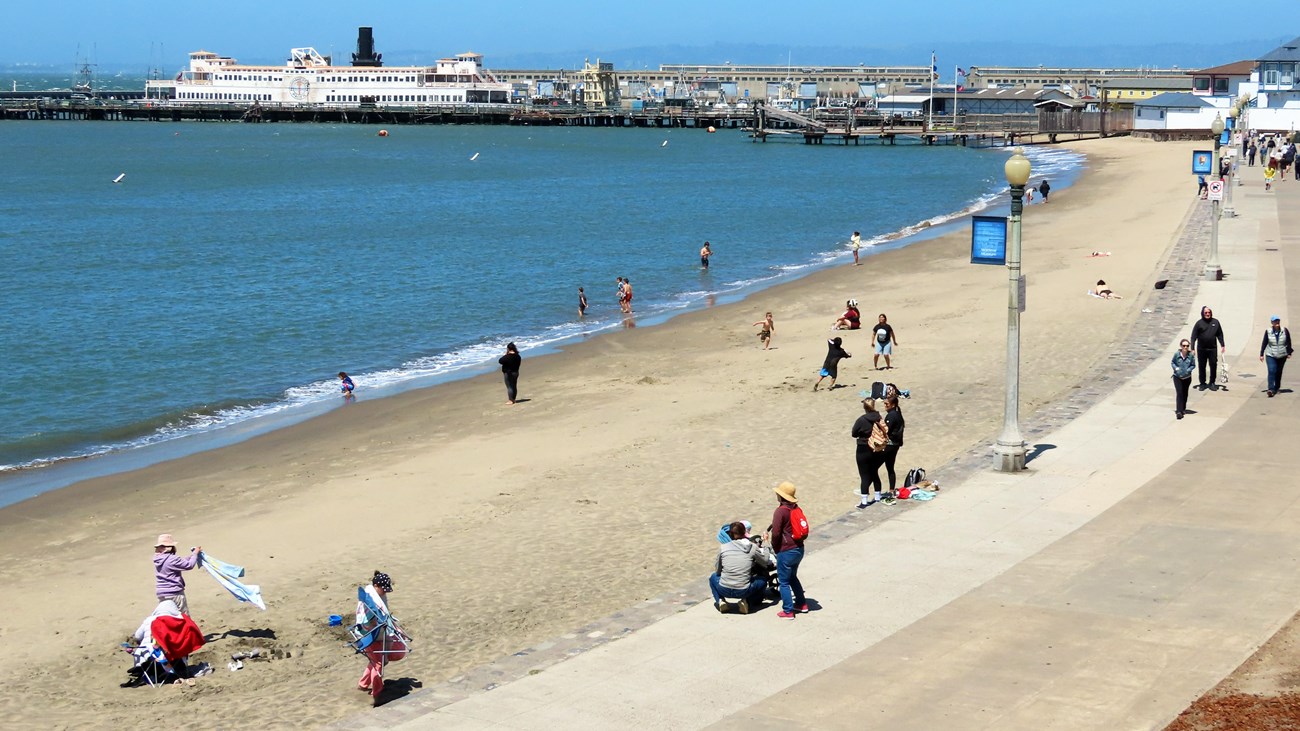
A unique recreational waterfront park where the city meets the bay, featuring a semi-protected cove for swimming, kayaking, and sailing.
Where is Aquatic Park located?
Aquatic Park is located at the head of Van Ness Avenue on San Francisco’s northern waterfront, close to Fisherman’s Wharf and other waterfront sights.
What is Aquatic Park known for?
It is the only San Francisco waterfront built specifically for recreation and is known as a 'water wonderland' that opened in 1939. It is a place to observe marine life, tides, and Bay vistas.
What activities can I do there?
Visitors can engage in open-water swimming, kayaking, paddleboarding, and rowing at Aquatic Park Cove.
Is it safe for swimming?
There are no lifeguards on duty, so safety is the visitor's responsibility. While the Municipal Pier and underwater baffles protect the cove from turbulence, bay swimming can be challenging due to boat traffic, sea life, strong tides, and cold water temperatures (ranging from under 50°F in winter to the low 60°F in warmer months).
Can I anchor my boat overnight?
Overnight anchoring is permitted for sailboats with small auxiliary engines, with a maximum of 12 visiting vessels allowed. Private motor-only boats are prohibited.
What should I check before going?
Use Gyde for context, then check official sources for current hours, tickets, construction, and closures.
What to know
Aquatic Park is a distinctive public park located at the head of Van Ness Avenue on San Francisco’s northern waterfront. It holds the distinction of being the only waterfront area in the city built specifically for recreation, designed to immerse visitors in the wind, tides, and marine life of the Bay. The park opened as a 'water wonderland' in 1939 after years of planning, transforming the area into a hub for aquatic activities. To make the waters safe for public use, the pier's underwater baffles protected the former Black Point Cove from tidal action. This engineering feat, along with the long arm of the Municipal Pier, shields the cove from the turbulence of the bay, creating a semi-protected environment. This design allows the site to serve as a small-craft gateway to San Francisco, where visitors can engage in kayaking, paddleboarding, rowing, and open-water swimming. Despite the welcoming design, the environment remains challenging. Water temperatures in the San Francisco Bay range from under 50°F in the winter to the low 60°F in warmer months. Because there are no lifeguards on duty, safety is the responsibility of the visitor. The park is part of the San Francisco Maritime National Historical Park, integrating natural beauty with the city's maritime history. Economically, the park is a major draw. In 2018, an NPS-reported estimate indicated that 4.2 million visitors spent $106 million in nearby communities, supporting 1,060 local jobs and contributing $121 million to the local economy.
Visitor tips
- Be aware that there are no lifeguards on duty if you plan to swim or paddle.
- Check for entrance fees that may apply when visiting the cove.
- Dress in layers for the cold bay breeze, as water temperatures can drop below 50°F.
Nearby context
Located at the head of Van Ness Avenue, Aquatic Park is situated close to Fisherman's Wharf Historic Piers and the Powell-Hyde Cable Car Turnaround, making it a perfect stop on a northern waterfront stroll.
Sources
Evidence and links
-
Aquatic Park Cove, Black Point Overnight Anchoring, Sailing ...
Aquatic Park Cove is a vibrantly urban harbor that mimics a natural anchorage and is located on the Pacific shores of one of America's grea…
recreation.gov -
Enjoy the Beach at Aquatic Park Cove
Aquatic Park Cove offers opportunities for kayaking, paddle boarding, rowing, as well as open water swimming in a semi-protected environmen…
nps.gov -
Aquatic Park - Open Water Data
The cove is close to Fisherman's Wharf and other famous San Francisco waterfront sights.
openwaterdata.com -
Aquatic Park - San Francisco
Aquatic Park is the only San Francisco waterfront that was built for recreation – it is a place to observe and be immersed in the tides and…
cmgsite.com -
Aquatic Park Pier
Aquatic Park is a distinctive public park located at the head of Van Ness Avenue where it meets the northern waterfront's aquatic recreatio…
aquaticparkpier.org -
Aquatic Park Pier - San Francisco City Guides
Aquatic Park was a dream for many years before it came to life as a *water wonderland* in 1939.
sfcityguides.org