
San Francisco, California / History
Fort Winfield Scott
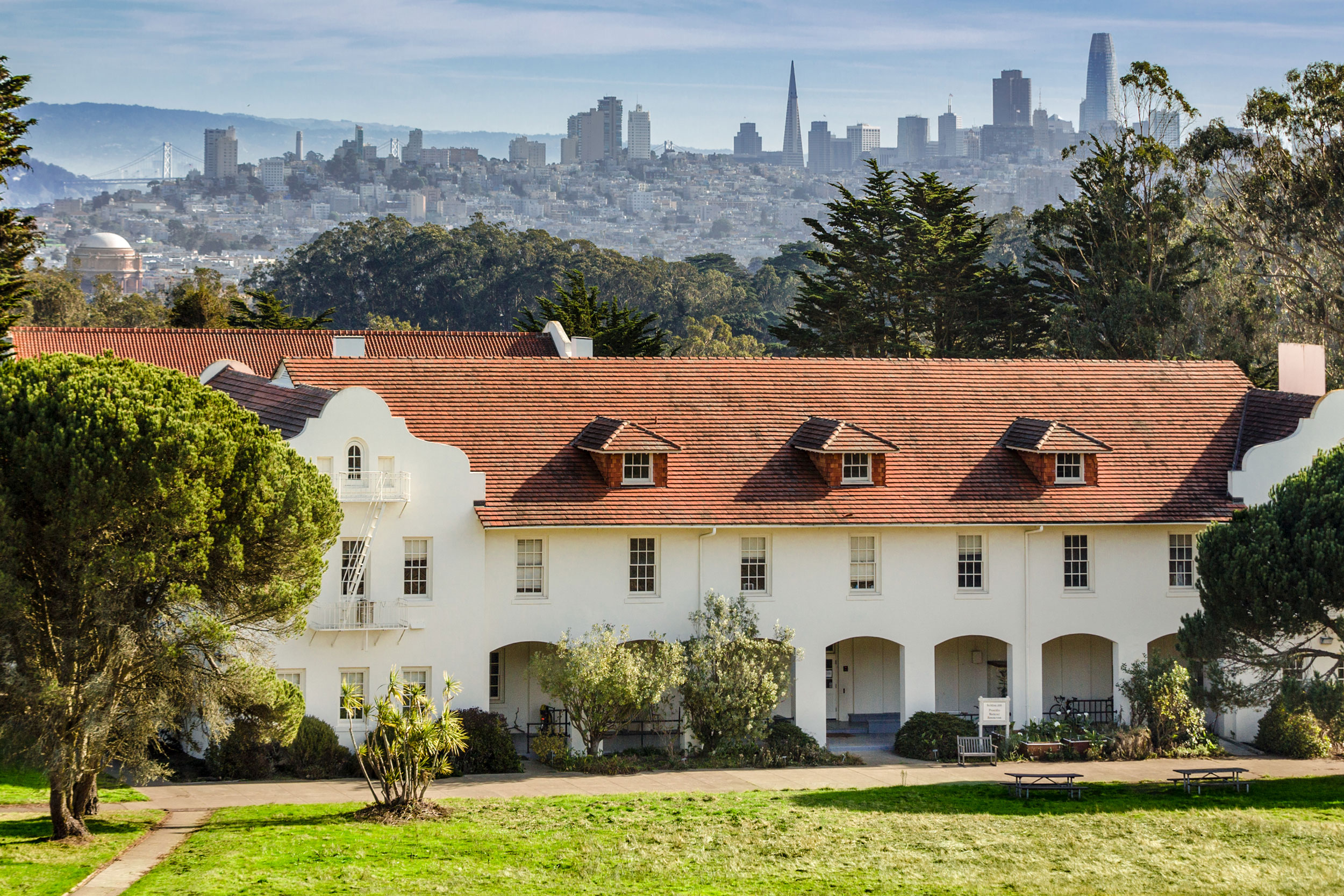
A stunning 30-acre campus along the Presidio's western shore, this former Army coastal defense headquarters blends Mission Revival architecture with commanding views of the Pacific Ocean.
What is Fort Winfield Scott known for?
Fort Winfield Scott is a historic site that served as the headquarters for the Army's coastal defenses in the Presidio and Bay Area for half a century. It is also known for introducing Mission Revival style architecture to the Presidio.
Where is Fort Winfield Scott located?
It is located along the western shore of the Presidio, set within a historic forest of eucalyptus and cypress trees with views of the Pacific Ocean.
What is the history of Fort Winfield Scott?
Built between 1909 and 1912, the fort was established as a coast artillery post to defend the Pacific Coast from offshore attacks. It housed seventeen Endicott-era gun batteries between 1891 and 1946 before military operations ended in 1988 and the site became part of the National Park Service in 1994.
What can you find at Fort Winfield Scott today?
The site now hosts homes, workplaces, an athletic field, the Presidio Nursery, and the Log Cabin. It is also home to the Presidio Institute, which provides experiences for leaders.
What should I check before going?
Use Gyde for context, then check official sources for current hours, tickets, construction, and closures.
What to know
Fort Winfield Scott is a historic 30-acre campus located along the western shore of the Presidio. Built between 1909 and 1912, the site was officially established on June 19, 1912, to serve as a coast artillery post and the headquarters for the Artillery District of San Francisco. Named after a prominent 19th-century U.S. officer, the fort acted as the nerve center for the Army’s coastal defenses in the Bay Area for half a century. The site is architecturally significant for introducing Mission Revival style architecture to the Presidio. To defend the Pacific Coast from offshore attacks, the fort housed seventeen Endicott-era gun batteries that were constructed, armed, and manned between 1891 and 1946. These fortifications ensured the security of the San Francisco Bay during a critical era of military expansion. Today, the fort is integrated into the National Park Service, which it joined in 1994 after military operations at the Presidio ended in 1988. The campus has transitioned from a military stronghold into a community hub that hosts workplaces, homes, an athletic field, and the Presidio Nursery. It is also the home of the Presidio Institute, an organization dedicated to empowering leaders to create positive community impacts. Visitors can explore the grounds set within a historic forest of eucalyptus and cypress trees. The area remains a place of beauty, featuring the popular Log Cabin and offering expansive vistas of the Pacific Ocean from its elevated position on the coast.
Visitor tips
- Wear comfortable walking shoes to explore the forest paths and coastal overlooks.
- Visit during the morning to avoid crowds and enjoy the clearest views of the Pacific Ocean.
- Check for current access restrictions as some buildings now serve as private homes and workplaces.
Nearby context
Situated on the western edge of the Presidio, Fort Winfield Scott is a key stop for those exploring the city's military history. It is located in close proximity to the Fort Point National Historic Site, allowing visitors to contrast the inland headquarters of the coastal defense system with the waterfront fortifications at the Golden Gate.
Sources
Evidence and links
-
Fort Winfield Scott - Presidio.gov
Fort Winfield Scott is a place of beauty and history. Built between 1909 and 1912, for half a century this 30-acre campus held the headquar…
presidio.gov -
Fort Winfield Scott (U.S. National Park Service)
This beautiful campus, once its own US Army post dedicated to defending San Francisco Bay, introduced Mission Revival style architecture to…
nps.gov -
Fort Winfield Scott - Presidio of San Francisco (U.S. National Park ...)
On June 19, 1912, Fort Winfield Scott was established in the western part of the Presidio as a coast artillery post and the headquarters of…
nps.gov -
The Hidden History of Fort Scott in San Francisco's Presidio - KQED
Fort Scott — whose official name is actually Fort *Winfield * Scott, after one of the most prominent U.S. officers of the 19th century — wa…
kqed.org