
Seattle, Washington / Public art
AIDS Memorial Pathway
A poignant public-art installation in Capitol Hill honoring those lost to the AIDS epidemic and the community that cared for them through art, storytelling, and augmented reality.
What is the AIDS Memorial Pathway known for?
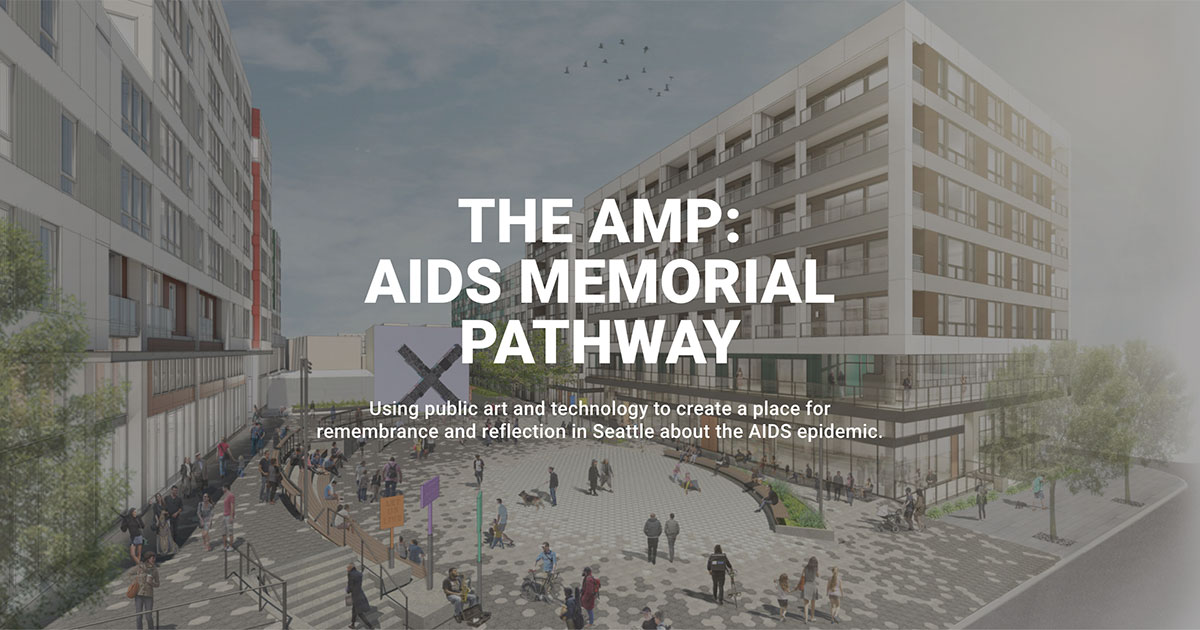
The AIDS Memorial Pathway (AMP) is a public-art and technology installation dedicated to remembrance, reflection, storytelling, and advocacy regarding HIV/AIDS. It frames the crisis as a story of dignity, social justice, and community response, serving as one of only a few memorials honoring those lost to the epidemic and those who cared for them.
Where is it located?
The AMP is located within Cal Anderson Park in the Capitol Hill neighborhood of Seattle. Its physical footprint extends from the north edge of the park, across Barbara Bailey Way to the plaza, and up to the community room of the Station House Building.
What are the hours?
As it is located in Cal Anderson Park, it is open daily from 4 a.m. to 11:30 p.m.
What can I see there?
The installation includes four major works of public art, including a 20-foot X sculpture by Christopher Paul Jordan that evokes stacks of speakers from bars and clubs to honor community spaces. Visitors can also access online stories and an augmented-reality app featuring a virtual tour and a Names Tree.
Is it accessible?
Yes, the memorial is located in Cal Anderson Park, which features paved pathways and ADA-accessible amenities.
What should I check before going?
Use Gyde for context, then check official sources for current hours, tickets, construction, and closures.
What to know
Completed in 2022, the AIDS Memorial Pathway (AMP) is a unique installation designed for remembrance, reflection, and anti-stigma advocacy. Located within Cal Anderson Park in Seattle's Capitol Hill neighborhood, the project frames the AIDS crisis as a story of dignity, humanity, and social justice. It serves as one of only a handful of memorials dedicated to honoring both the victims of the epidemic and the caregivers who fought alongside them. The physical footprint of the pathway is expansive, extending from the north edge of Cal Anderson Park across Barbara Bailey Way to the plaza and continuing up to the community room of the Station House Building. The installation features four major works of public art. One of the most striking components was designed by Tacoma artist Christopher Paul Jordan: a 20-foot X composed of smaller sculptures that evoke stacks of speakers from bars and clubs, paying homage to the queer community spaces where marginalized people found solidarity. Beyond the physical sculptures, the AMP integrates modern technology to deepen the visitor experience. The project includes stories hosted online and a dedicated app available for Android and iPhone. Through this app, visitors can engage with augmented reality (AR) features, explore a virtual tour, and interact with a Names Tree, ensuring that the stories of the epidemic and the diverse community responses remain accessible to all.
Visitor tips
- Download The AMP app on your iPhone or Android before arriving to access the Names Tree and AR features.
- The park is open daily from 4 a.m. to 11:30 p.m., making it a flexible stop for any time of day.
- Utilize the paved pathways and ADA-accessible amenities for an easier navigation of the memorial's footprint.
Nearby context
The memorial is situated in Cal Anderson Park, which sits in the center of Capitol Hill, Seattle's historic queer hub. This placement ties the art directly to the neighborhood where the community response to the AIDS crisis was most concentrated.
Sources
Evidence and links
-
About the AMP - AIDS Memorial Pathway
The AMP: AIDS Memorial Pathway uses public art to create a physical place for remembrance and reflection, shares stories about the epidemic…
theamp.org -
Cal Anderson Park | Seattle Parks and Recreation
Cal Anderson Park is a large, open, accessible park in the Capitol Hill neighborhood of Seattle, Washington.
seattle.gov -
Explore - Cal Anderson Park
The AMP: AIDS Memorial Pathway is a unique installation that includes 4 major works of public art, stories hosted online, and an app with a…
calandersonpark.org -
The AMP — AIDS Memorial Pathway
The AMP: AIDS Memorial Pathway is a unique installation that includes 4 major works of public art, stories hosted online, and an app with a…
theamp.org -
Seattle's AIDS Memorial Pathway becomes one of few memorials ...
The AMP will become one of only a handful of memorials honoring those lost to the AIDS epidemic and those who fought for and cared for them.
seattletimes.com -
The AIDS Memorial Pathway Is Capitol Hill's Latest Call for Action
A new art installation celebrates the response to the AIDS crisis in what was once Seattle's undisputed queer hub.
seattlemet.com