
Seattle, Washington / Parks and outdoors
Burke-Gilman Trail
A 20-mile paved rail-trail stretching from Shilshole Bay to Bothell, following the route of a historic railroad corridor through diverse Seattle neighborhoods.
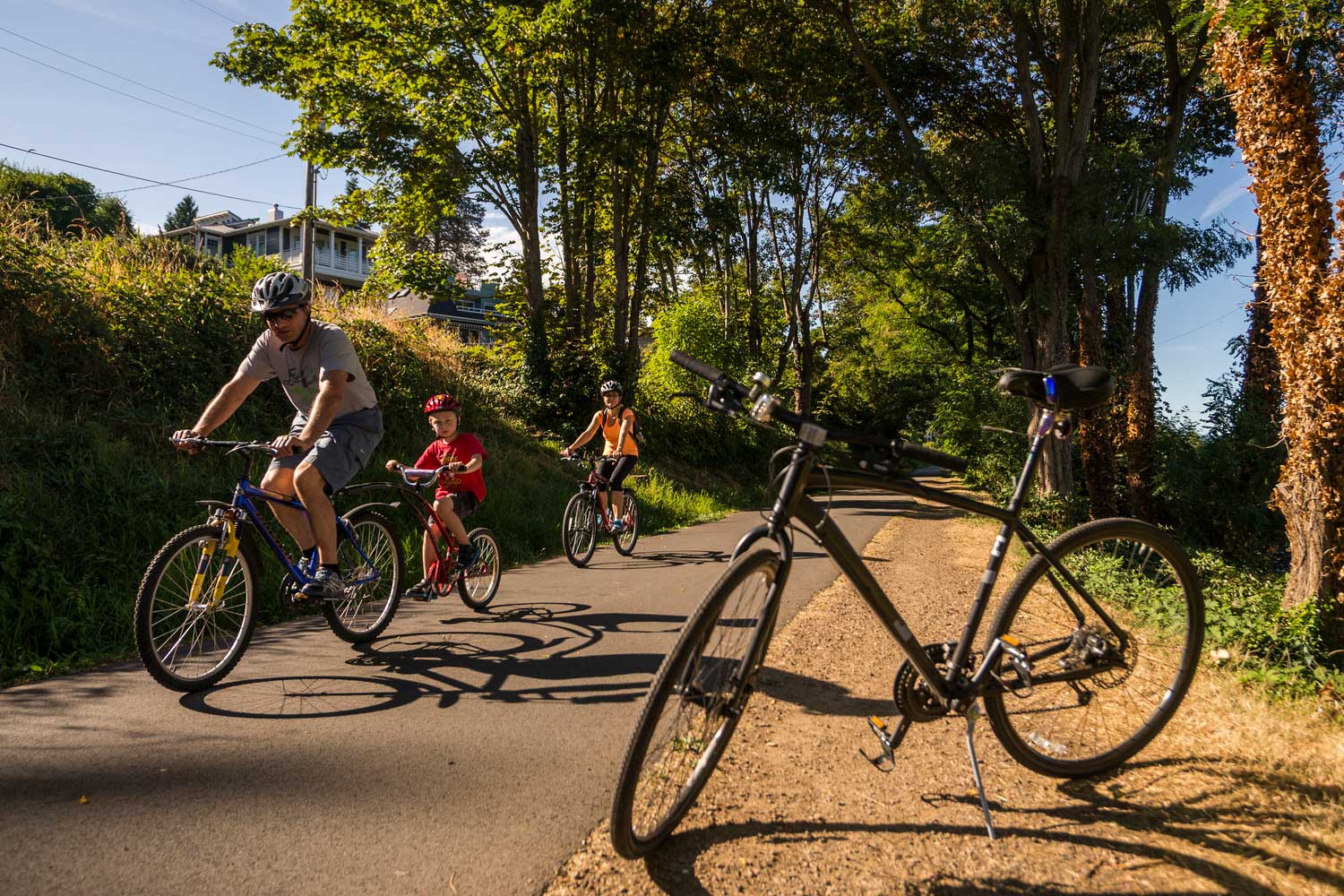
What is the Burke-Gilman Trail known for?
It is a popular 20-mile regional multi-use rail trail used by commuters, walkers, runners, cyclists, skaters, and strollers.
Where does the trail go?
The trail runs more than 20 miles from Shilshole Bay (or Golden Gardens Park) in Seattle to Bothell, where it intersects the Sammamish River Trail. It crosses several Seattle neighborhoods, including Ballard, Fremont, Wallingford, the University District, and View Ridge, and continues through Lake Forest Park and Kenmore.
Is the trail paved?
Yes, it is a paved, off-road facility for its entire length, with the exception of one on-road segment located in Ballard.
What is the history of the trail?
The trail officially opened in 1978 and follows a former rail corridor once owned by the Burlington Northern Railroad (specifically the Seattle, Lakeshore and Eastern Railroad). It is named after Judge Thomas Burke and businessman Daniel Gilman, who were early creators of the railroad corridor.
What should I check before going?
Use Gyde for context, then check official sources for current hours, tickets, construction, and closures.
What to know
The Burke-Gilman Trail is a premier regional multi-use facility in King County, Washington, stretching over 20 miles from Shilshole Bay in Seattle to the City of Bothell. It serves as a vital transportation corridor for commuters and recreational users, catering to walkers, runners, cyclists, skaters, and strollers. The trail's paved, off-road design is consistent throughout its length, with the exception of a specific on-road segment in Ballard. Historically, the trail follows the route of the old Seattle, Lake Shore and Eastern Railroad, a line that began in the 1880s and once transported coal, iron, and timber from the Cascade Mountains. The corridor was previously owned by Burlington Northern Railroad. The trail officially became a dedicated multi-use path in 1978, named after Judge Thomas Burke and businessman Daniel Gilman, the early creators of the railroad corridor. As it winds through the city, the trail crosses several distinct Seattle neighborhoods, including Ballard, Fremont, Wallingford, the University District, and View Ridge. It continues eastward through Lake Forest Park, Kenmore, and Bothell, where it eventually intersects the Sammamish River Trail. The path follows a U-shaped route that connects Seattle's Puget Sound neighborhoods in the west to Lake Washington in the east. Ongoing improvements continue to enhance the safety of the trail. For example, the Missing Link project addresses safety improvements along 1.4 miles of Salmon Bay east of the Ballard Locks, ensuring the trail remains a safe and accessible regional asset for all users.
Visitor tips
- Be mindful of the on-road segment in Ballard where you will share the space with vehicles.
- If you have limited time, explore the section between Fremont and the University District for a lively urban vibe.
- Wear comfortable walking or skating shoes as the trail is paved and extends over 20 miles.
Nearby context
The Burke-Gilman Trail serves as a connective tissue for the city, linking neighborhoods like Ballard and Fremont, and extending far beyond the city limits to Bothell.
Sources
Evidence and links
-
Burke-Gilman Trail - King County, Washington
The Burke-Gilman Trail (BGT) runs more than 20 miles from Shilshole Bay in the City of Seattle to the City of Bothell where it intersects t…
kingcounty.gov -
Burke-Gilman Trail - Parks | seattle.gov
The Burke-Gilman Trail is a popular recreational trail for walkers, runners, cyclists, skaters and commuters.
seattle.gov -
Burke-Gilman Trail Missing Link - Transportation - Seattle.gov
The Burke-Gilman Trail Missing Link refers to the long-planned multi-use trail safety improvements along 1.4 miles of Salmon Bay east of th…
seattle.gov -
Burke–Gilman Trail - Wikipedia
The Burke–Gilman Trail is a rail trail in King County, Washington. The 20-mile (32 km) multi-use recreational trail is part of the King Cou…
en.wikipedia.org -
Washington's Burke-Gilman Trail - Rails to Trails Conservancy
The trail, which officially opened in 1978, follows the route of the old Seattle, Lakeshore and Eastern Railroad, a line that began in the…
railstotrails.org