
Seattle, Washington / Parks and outdoors
Gas Works Park
A groundbreaking industrial reclamation project on the north shore of Lake Union, where former coal gasification machinery creates a surreal backdrop for sweeping views of the Seattle skyline.
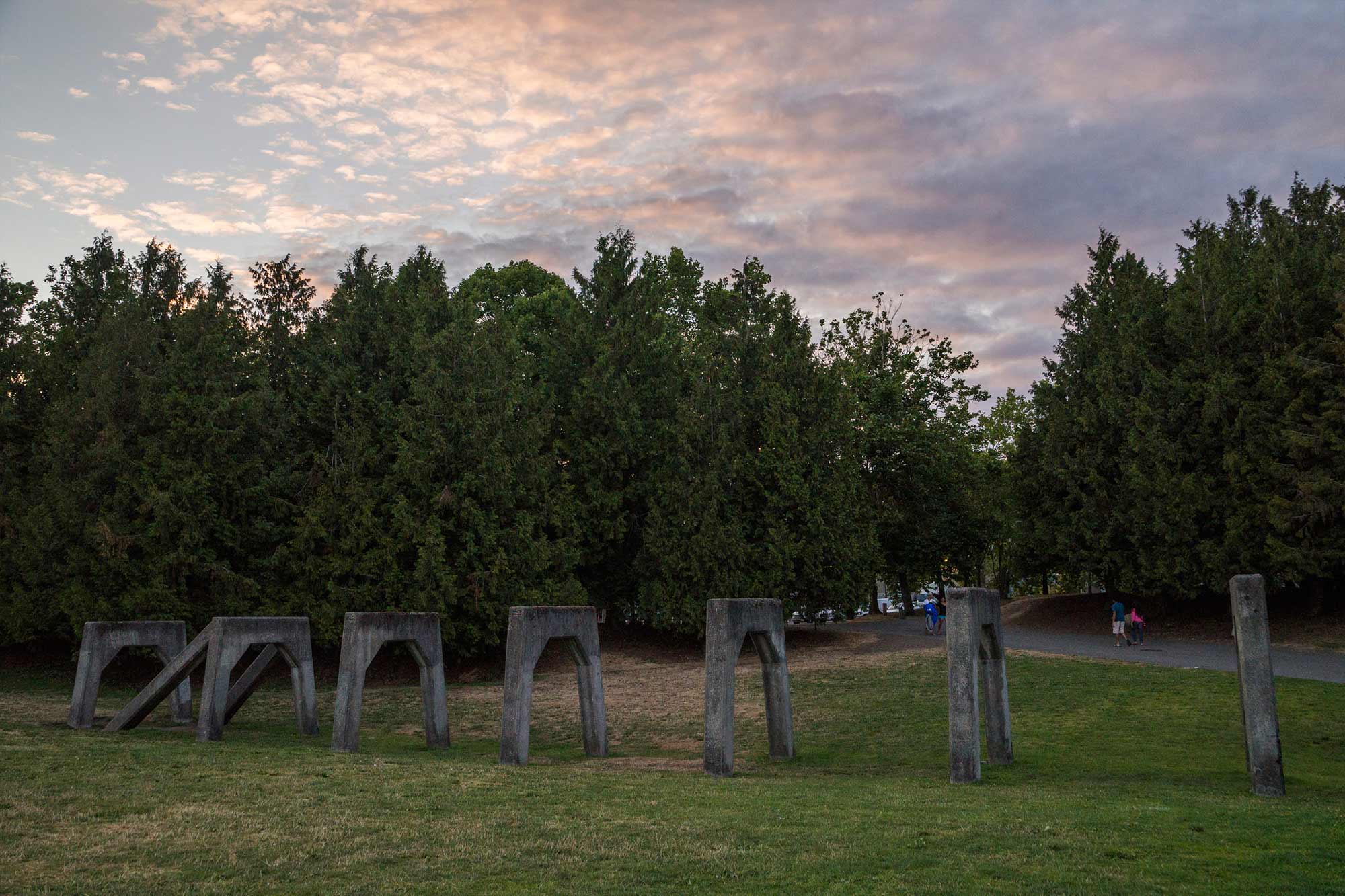
What is Gas Works Park known for?
It is a groundbreaking example of transforming a polluted industrial landscape into public open space, specifically a former coal gasification plant on the north shore of Lake Union.
What are the hours?
The park is listed as open daily from 6:00 a.m. to 10:00 p.m.
Is it good for kids?
Yes, the park features a Play Barn, which is a former exhauster-compressor building transformed into an open-air play area with a maze of brightly painted machinery for children.
Can I swim or fish in the lake at the park?
No, swimming, fishing, wading, and launching boats from the park are prohibited because the lake sediment contains hazardous substances.
What activities can I do there?
The park is designed for passive recreation such as strolling, kite flying, and community gatherings. Visitors can also enjoy sweeping views of Seattle from the Great Earth Mound (Kite Hill) and the Waterfront Promenade.
What should I check before going?
Use Gyde for context, then check official sources for current hours, tickets, construction, and closures.
What to know
Gas Works Park is a major public space located on the north shore of Lake Union in Seattle, Washington. The site served as a coal gasification plant from 1906 to 1956, producing fuel for the city before the facility was shut down. The City of Seattle acquired the land for park use in 1962, eventually transforming a polluted industrial landscape into a celebrated public open space. This unique preservation of industrial ruins led to the park being added to the National Register of Historic Places on January 2, 2013. The park's architecture blends industrial remains with intentional landscaping. A central boiler house was converted into a picnic shelter equipped with fire grills and tables. Nearby, a former exhauster-compressor building was reimagined as the Play Barn, an open-air structure featuring a maze of brightly painted machinery for children to explore. These structures stand alongside the Waterfront Promenade, offering a stark contrast between the rusted steel of the past and the natural beauty of the lake. Visitors often gravitate toward the Great Earth Mound, also known as Kite Hill. Constructed from excavated material found on-site, this rolling hill provides one of the most iconic vantage points in the city for watching water traffic on Lake Union and viewing the downtown skyline. The park is designed for passive recreation, making it a prime location for strolling, flying kites, and hosting community gatherings. While the park is a hub for activity, the surrounding environment requires caution. Access to Lake Union is strictly restricted because the lake sediment contains hazardous substances. Consequently, the city prohibits swimming, fishing, wading, and launching boats directly from the park grounds to ensure visitor safety.
Visitor tips
- Visit between 6:00 a.m. and 10:00 p.m. to enjoy the grounds.
- Avoid the waterfront edge; swimming and fishing are prohibited due to hazardous lake sediment.
- Walk along the adjacent Burke-Gilman Trail if you wish to extend your trip toward Log Boom Park.
- Bring a kite to fly on the Great Earth Mound for a classic Seattle experience.
Nearby context
Situated on the north shore of Lake Union, the park is a key anchor for the neighborhood's waterfront. It is directly served by the Burke-Gilman Trail, which connects the park to the Sammamish River Trail and Log Boom Park to the north.
Sources
Evidence and links
-
Gas Works Park - Seattle.gov / Seafair 4th of July at Gas Works Park
## 2026 Large Events at Gas Works Park
seattle.gov -
Gas Works Park
Gas Works Park is a park located in Seattle, Washington, United States.
en.wikipedia.org -
Gas Works Park - Outdoor Activities | Begin at Bothell
Mon: 6:00am-10:00pm Tues: 6:00am-10:00pm Wed: 6:00am-10:00pm Thu: 6:00am-10:00pm Fri: 6:00am-10:00pm
beginatbothell.com -
Gas Works Park - Washington Trails Association
Popular year-round, but especially on sunny summer days, Gas Works Park is a popular greenspace with some old remains from an coal gasifica…
wta.org -
Gas Works Park | TCLF - The Cultural Landscape Foundation
The nineteen-acre site was acquired by the City for parkland in 1965.
tclf.org