Seattle, Washington / Public art
Guests from the Great River
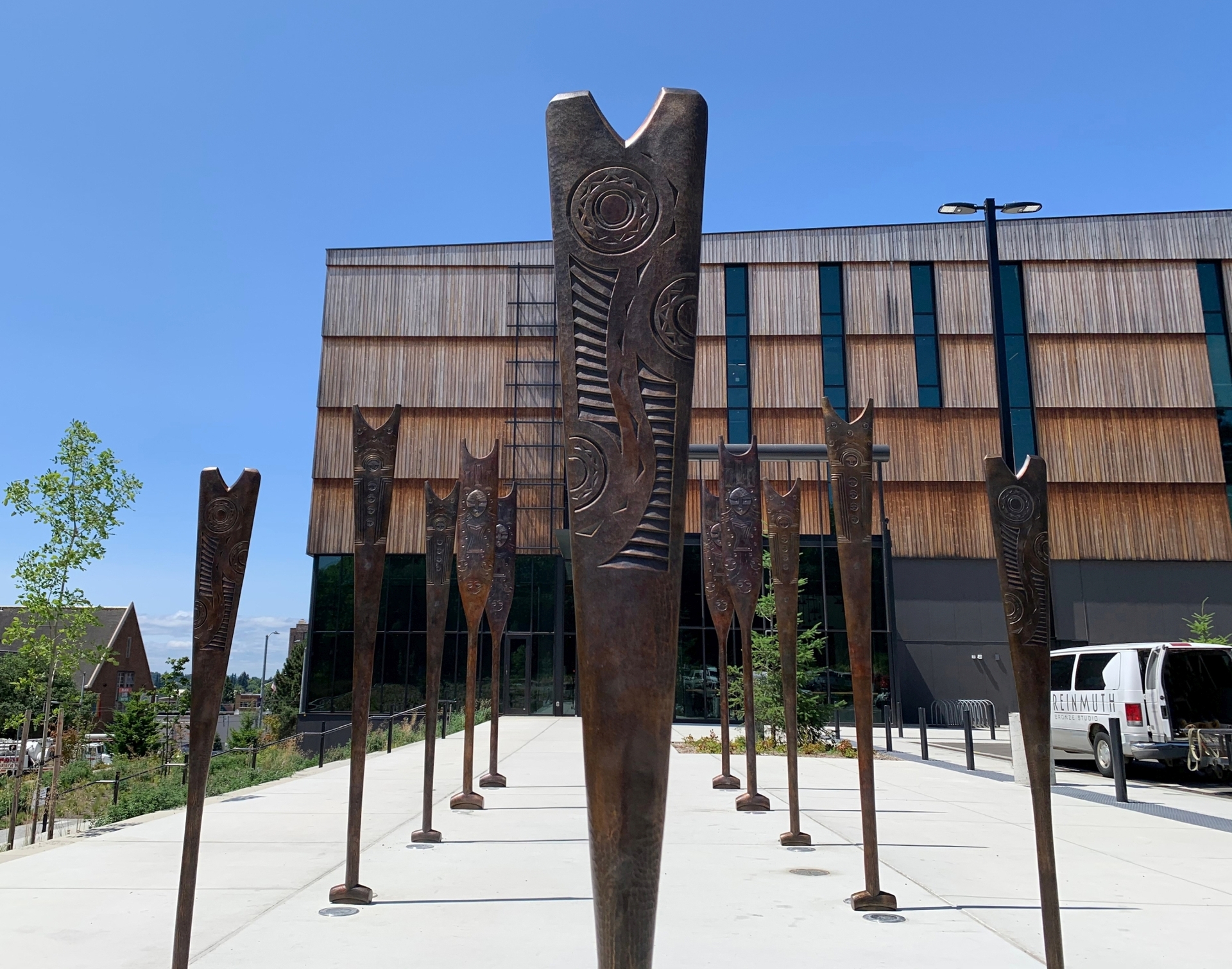
A powerful outdoor installation of 11 bronze paddles at the Burke Museum, symbolizing the arrival of Chinookan cultural heroes and their ancestral knowledge.
What is Guests from the Great River?
It is an outdoor public artwork located at the Burke Museum in Seattle, consisting of 11 large-scale, carved, upright bronze paddles.
Where is the artwork located?
The installation is located at the Burke Museum in Seattle, specifically greeting visitors at the museum's east entrance just outside the doors.
What is the meaning behind the sculpture?
The 11 bronze paddles represent a Chinookan canoe carrying cultural heroes and knowledge from the Columbia River region. Additionally, the raised canoe paddle serves as a gesture of respect and acknowledgment in Chinookan culture.
Who created this piece?
The artwork was created by Adam McIsaac and Tony A. (naschio) Johnson, a member of the Chinook Indian Nation and Chairman who has studied ancestral artistic traditions for decades.
When was it installed?
The work was commissioned in 2018 and is a 2020 artwork. It was announced in honor of Indigenous Peoples Day, one year after the opening of the new Burke Museum.
What should I check before going?
Use Gyde for context, then check official sources for current hours, tickets, construction, and closures.
What to know
Guests from the Great River is a striking outdoor public artwork located at the Burke Museum in Seattle. The installation consists of 11 large-scale bronze paddles, sculpted in varied sizes and styles to represent a Chinook canoe carrying cultural heroes from the Columbia River region. These figures bring with them the knowledge they embody, extending the museum's art beyond its physical walls. Commissioned in 2018 by ArtsWA in partnership with the University of Washington, the piece was created by artists Tony A. (naschio) Johnson and Adam McIsaac. Tony A. Johnson, a member of the Chinook Indian Nation and Chairman of the Nation, is a practitioner of ancestral artistic traditions that he has studied for decades. The arrangement of the carved, upright bronze paddles serves as a symbolic gesture. In Chinookan culture, the raised canoe paddle is a salute of respect and acknowledgment that goes far beyond a simple greeting. This installation greets visitors as they arrive at the museum's east entrance, serving as a gateway to the land on which the university sits. Officially announced in honor of Indigenous Peoples Day in 2020, the work was installed one year after the opening of the new Burke Museum. It stands as a permanent testament to the Indigenous presence and the sharing of cultural heritage in the heart of the campus.
Visitor tips
- Visit the east entrance of the Burke Museum to find the installation.
- Take a moment to reflect on the symbolic meaning of the raised paddle salute in Chinookan culture.
- Allow time to walk around the installation to appreciate the varied sizes and styles of the 11 bronze paddles.
Nearby context
Located at the east entrance of the Burke Museum, this installation integrates the University of Washington campus's public art collection with the Indigenous heritage of the Columbia River region.
Sources
Evidence and links
-
New Chinook Art Piece Welcomes Visitors to the Burke Museum
Created by Chinook Indian Nation Chairman and artist Tony A. (naschio) Johnson and artist Adam McIsaac, the piece consists of 11 large-scal…
burkemuseum.org -
Public Art - ArtsWA - Washington State Arts Commission
Outdoor artwork of carved, upright, bronze paddles at the Burke Museum in Seattle. "Guests from the Great River" (2020) by Tony (naschio) J…
arts.wa.gov -
12 remarkable UW works of art | Be Boundless
Guests From the Great River (2020): Burke Museum. Bronze paddles in two rows. The art of the Burke Museum extends beyond its walls with the…
washington.edu -
Iconic Seattle Public Art - Chinook Indian Nation
ArtsWA, in partnership with UW, commissioned artists Tony A. (naschio) Johnson and Adam McIsaac for Guests from the Great River in 2018.
chinooknation.org