
Washington, D.C., District of Columbia / Landmarks
District of Columbia War Memorial
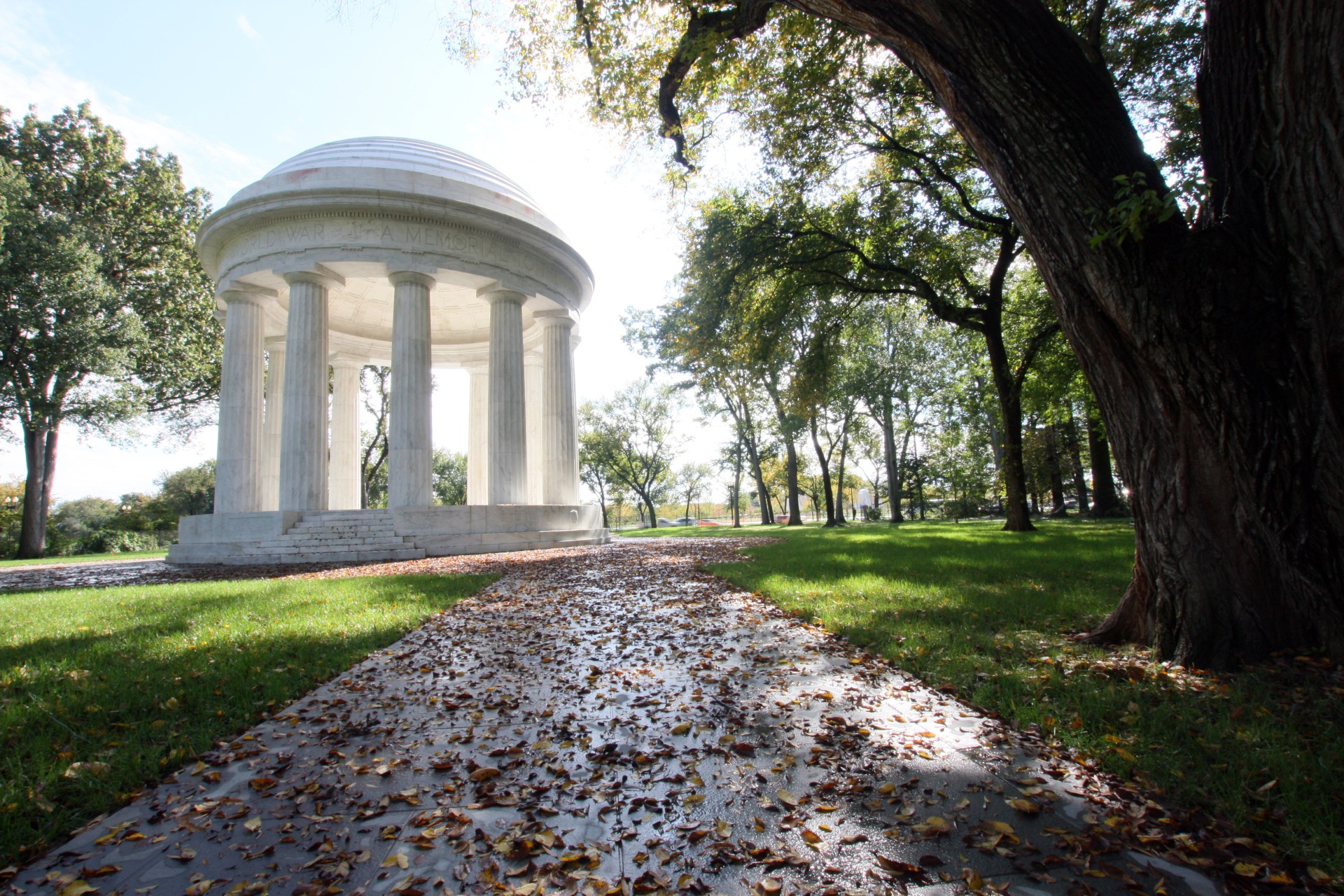
A serene, open-air Doric temple of Vermont marble honoring 499 District residents who died in World War I, serving as the only local tribute on the National Mall.
What is the District of Columbia War Memorial known for?
It is a local tribute and the only District memorial on the National Mall, dedicated to honor the 499 residents of the District of Columbia who died in service during World War I.
Where is it located?
The memorial is located on the National Mall in Washington, D.C., just south of the Reflecting Pool.
What does the memorial look like?
It is an open, circular Doric temple made of Vermont marble, featuring 12 fluted columns surrounding a raised platform.
How are the names of the fallen listed?
The names of 499 Washington residents are inscribed on the face of the platform in alphabetical order, with no distinction made for race, gender, or rank.
Is the memorial used for anything other than a monument?
Yes, the raised platform was originally intended as a bandstand, and the site continues to be used as an active venue for concerts and special events.
What should I check before going?
Use Gyde for context, then check official sources for current hours, tickets, construction, and closures.
What to know
The District of Columbia War Memorial is a poignant tribute dedicated on November 11, 1931, to honor 499 District residents who died in service during World War I. Unlike the massive national monuments that surround it, this site was deliberately conceived as a local tribute—a memorial created by the citizens of the District of Columbia for their own citizens. It stands as the only District-specific memorial on the National Mall, symbolizing the city's unique status as a local entity within the federal capital. Designed by architect Frederick H. Brooke in collaboration with Nathan C. Wyeth and Horace Peaslee, the structure takes the form of an open, circular Doric temple. Built almost entirely of Vermont marble, the memorial reaches a height of 47 feet and features 12 fluted columns. These columns surround a raised marble platform, four feet high, which was originally intended to serve as a bandstand. The platform is inscribed with the names of the fallen residents, listed alphabetically without any distinction based on gender, race, or rank. The memorial's history is marked by high-profile gatherings and careful preservation. President Herbert Hoover dedicated the site on Armistice Day in 1931, an event attended by thousands, including Gold Star Mothers and notable figures like General John J. Pershing and John Philip Sousa. To ensure its longevity, the site underwent a $3.6 million restoration in 2010 under the American Recovery and Restoration Act, with further work completed in 2011 to clean the marble and stabilize the structure. Today, the memorial maintains a dual identity as both a solemn monument and an active performance venue. Its intimate scale and classical design echo the broader architecture of the Mall while providing a quieter space for reflection. It continues to host concerts and special events, echoing the tradition started when the U.S. Marine Band performed at its original dedication.
Visitor tips
- Walk around the base of the four-foot-high platform to read the alphabetically listed names of the fallen residents.
- Visit during the early morning or late afternoon to avoid the midday heat, as the structure is open-air and provides limited shade.
- Check local event calendars to see if the memorial is currently hosting any concerts or special performances.
Nearby context
Located just south of the Reflecting Pool on the National Mall, this memorial provides a quiet contrast to the high-traffic national monuments nearby. It serves as a bridge between the grand federal scale of the Mall and the local history of Washington, D.C. residents.
Sources
Evidence and links
-
District of Columbia War Memorial - National Park Service
Its classical form echoes the architecture of the Mall while offering a more intimate scale.
nps.gov -
District of Columbia War Memorial - National Park Service
The D.C. War Memorial is the only District memorial on the National Mall.
nps.gov -
DC War Memorial — Content - Trust for the National Mall
The District of Columbia War Memorial, which was constructed in 1931 to honor those District residents who served and died in World War I,…
nationalmall.org -
National Mall and Memorial Parks | WORLD WAR I MEMORIAL |
The National World War I Memorial at Pershing Park in Washington, D. C., officially opened to the public on April 17, 2021.
npplan.com