
Washington, D.C., District of Columbia / Public art
Japanese Lantern
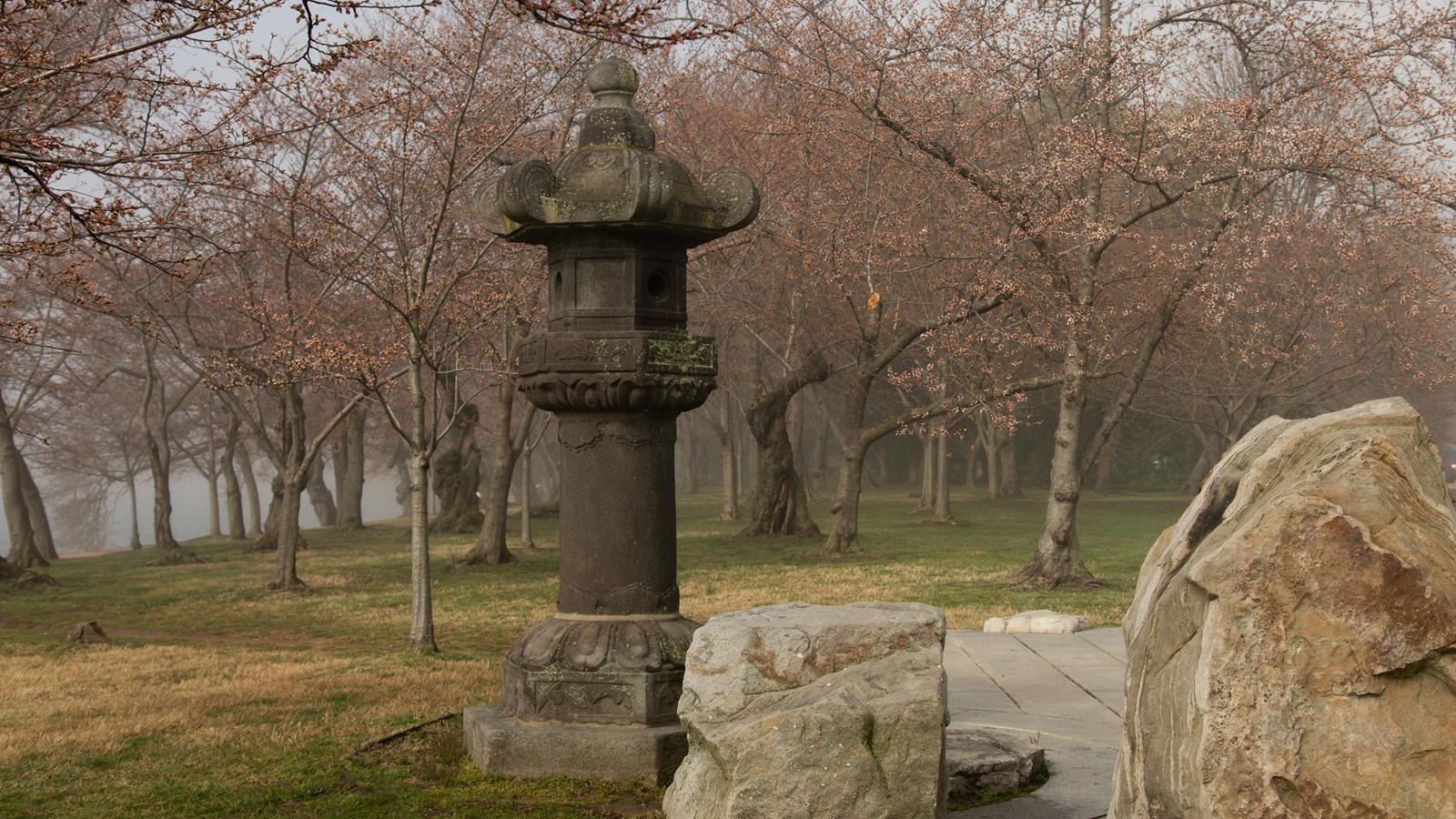
A historic 17th-century granite lantern from Tokyo, symbolizing peace and friendship between the United States and Japan, situated amidst the iconic cherry blossoms of the Tidal Basin.
What is the Japanese Lantern known for?
It is the oldest free-standing, man-made stone structure standing outdoors in Washington, D.C. It symbolizes peace, friendship, and the enduring cultural partnership between Japan and the United States.
What is the history of the Japanese Lantern?
Created in 1651 as a funeral monument to Tokugawa Iemitsu, the lantern was gifted to Washington by the Mayor of Tokyo on March 30, 1954. It commemorates the 100th anniversary of Commodore Matthew Perry’s mission to Japan.
Where is it located?
The lantern is located at the Tidal Basin in Washington, D.C., specifically on the northwestern edge of the basin. It stands near the spot where the first Japanese cherry trees were planted in 1912.
How big is the lantern?
The lantern is carved from solid granite, stands approximately eight and a half feet tall, and weighs around two tons (4,000 pounds).
Is there a special event associated with it?
Yes, the lantern is traditionally and ceremonially lit once a year during the National Cherry Blossom Festival.
What should I check before going?
Use Gyde for context, then check official sources for current hours, tickets, construction, and closures.
What to know
The Japanese Lantern is a massive granite structure standing eight and a half feet tall and weighing approximately two tons. Created in 1651 as a funeral monument to Tokugawa Iemitsu, the lantern is older than the United States itself and is recognized as the oldest free-standing, man-made stone structure standing outdoors in Washington, D.C. Its twin remains in Tokyo, Japan. Although plans to send the lantern to Washington were first proposed in 1921, diplomatic tensions and world events delayed the gift until March 30, 1954. It was presented by the Governor of Tokyo to commemorate the centennial of Commodore Matthew Perry’s mission to Japan, which opened the country to diplomatic and commercial relations nearly a century earlier. Standing on the northwestern edge of the Tidal Basin, the lantern is positioned near the spot where First Lady Helen Herron Taft and Viscountess Iwa Chinda planted the first two of over 3,000 cherry trees in 1912. In 2013, the Trust for the National Mall and Kurisu International developed a permanent landscape and a plaza with ADA-compliant pathways to improve accessibility and protect the surrounding cherry trees. Today, the lantern symbolizes the enduring cultural partnership and everlasting peace between the two nations. It serves as a focal point for the National Cherry Blossom Festival, where it is traditionally lit once a year in a formal ceremony that marks the public celebration of spring.
Visitor tips
- Visit during the National Cherry Blossom Festival to witness the annual lighting ceremony.
- Use the ADA-compliant pathways in the plaza to easily navigate the area around the lantern.
- Allow extra time if visiting during peak bloom, as the Tidal Basin area becomes extremely crowded.
Nearby context
The lantern is located on the northwestern edge of the Tidal Basin, nestled among the cherry blossoms and near the site of the first cherry tree planting of 1912.
Sources
Evidence and links
-
Japanese Stone Lantern (U.S. National Park Service)
Plans to send the stone lantern to Washington were originally proposed in 1921, but diplomatic tensions and the evolving geopolitical lands…
nps.gov -
Japanese Stone Lantern - Cherry Blossom Festival (U.S. National ...
Presented to the city of Washington on March 30, 1954, this stone lantern symbolizes the enduring cultural partnership that re-emerged betw…
nps.gov -
Japanese Lantern Lighting Ceremony for Cherry Blossom Festival ...
This stone lantern symbolizes the enduring international friendship between Japan and the United States established after World War II and…
georgetowner.com -
Japanese Lantern on the Tidal Basin - Trust for the National Mall
Presented to the city of Washington on March 30, 1954, this stone lantern symbolizes and stands as a gesture of everlasting peace and frien…
nationalmall.org -
Japanese Lantern, Washington, D.C. - Kurisu International
Initiated by former Japanese ambassador to the United States, Ichiro Fujisaki, the vision to create a permanent landscape to complement thi…
kurisu.com