
Washington, D.C., District of Columbia / Parks and outdoors
Meridian Hill Park
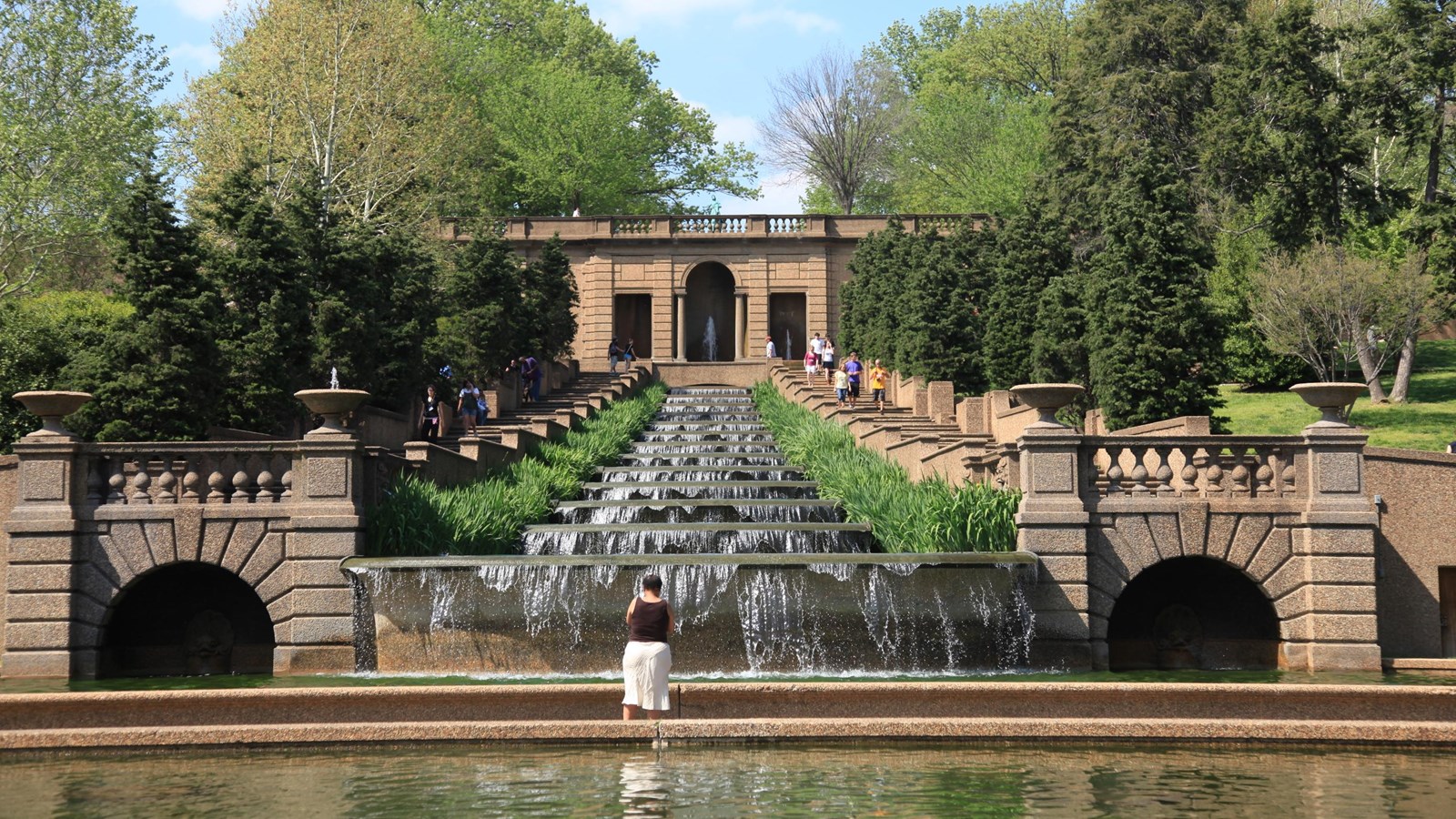
A grand Italian-style garden in Northwest D.C., this National Historic Landmark features monumental walls, cascading fountains, and a deep history of presidential residences and social activism.
What is Meridian Hill Park known for?
Meridian Hill Park is recognized for its architecture and landscape design, featuring an Italian-style garden with monumental walls and fountains built of exposed aggregate.
Is it free to visit Meridian Hill Park?
Yes, park entrance and programs are free.
What are the hours for Meridian Hill Park?
The park is open year-round during daylight hours and is closed after dark.
Is Meridian Hill Park wheelchair accessible?
The northern portion of the park is wheelchair accessible, including accessible paths on the lower level connecting from 16th St. NW and Florida Ave. NW / W St. NW to the President James Buchanan Memorial plaza. However, the south end is not accessible due to its historic architecture.
What is the history of Meridian Hill Park?
The park was designed and built between 1912 and 1936, and was officially opened to the public on September 26, 1936. It was previously the site of a mansion built in 1819 by John Porter and later the home of President John Quincy Adams in 1829.
What should I check before going?
Use Gyde for context, then check official sources for current hours, tickets, construction, and closures.
What to know
Meridian Hill Park is a stunning urban oasis located on elevated land in the Meridian Hill neighborhood, straddling the border between Adams Morgan and Columbia Heights. The grounds have a long residential history, beginning with a mansion erected by John Porter in 1819, which later served as the home for departing President John Quincy Adams in 1829. The U.S. government eventually purchased the land in 1910 to transform it into a public space. Designed and built between 1912 and 1936, the park was envisioned as a grand formal garden of the European model. Landscape architect George Burnap was hired in 1914 to create the initial design, while Horace Peaslee later modified the plans. Peaslee introduced the park's most striking features: extensive monumental walls and fountains constructed from exposed aggregate in various textures and colors. Mary Foote Henderson served as a primary driver for this development, lobbying Congress to realize her ambitious vision. Spanning approximately 12 acres, the park officially opened to the public on September 26, 1936. It is recognized for its architectural and landscape significance, earning a spot on the District of Columbia Inventory of Historic Sites in 1964 and becoming a National Historic Landmark in 1994. Today, it is maintained by the National Park Service as part of the larger Rock Creek Park system. Beyond its aesthetics, the park has been a center for social expression. During the 1970s, it became a site of racial protest, leading some residents to unofficially rename the space Malcolm X Park in honor of the civil rights leader. This blend of formal European design and grassroots American history makes the park a unique cultural crossroads in the city.
Visitor tips
- Entrance and all park programs are free of charge.
- Visit during daylight hours, as the park closes after dark.
- Wheelchair users should stick to the northern portion and lower-level paths; the south end is not accessible due to historic architecture.
- Wear comfortable walking shoes to explore the elevated terrain and paths connecting 16th St. NW to the President James Buchanan Memorial plaza.
Nearby context
The park sits on the Wicomico-Sunderland escarpment, acting as a green bridge between the vibrant neighborhoods of Adams Morgan and Columbia Heights in Northwest Washington, D.C.
Sources
Evidence and links
-
Discover Meridian Hill Park (U.S. National Park Service)
Designed and built between 1912 and 1936, Meridian Hill Park has beautiful art and architecture to enjoy.
nps.gov -
Meridian Hill Park (U.S. National Park Service)
Location: 16th Street between Euclid and W Streets NW, Washington, D.C.
nps.gov -
Meridian Hill Park - Wikipedia
Meridian Hill Park was 11.88 acres (4.81 ha) and was added to the District of Columbia Inventory of Historic Sites in 1964, the National Re…
en.wikipedia.org -
Meridian Hill Park in Washington, DC United States - Apple Maps
Meridian Hill Park is an urban park in Washington, D.C., located in the Meridian Hill neighborhood that straddles the border between Adams…
maps.apple.com -
Meridian Hill Park | TCLF - The Cultural Landscape Foundation
In 1914, the Department of the Interior hired George Burnap to design a grand formal park of the European model, as suggested by the 1902 M…
tclf.org